Seven Bright Impostors: A Field Guide to the Lights That Fool Everyone

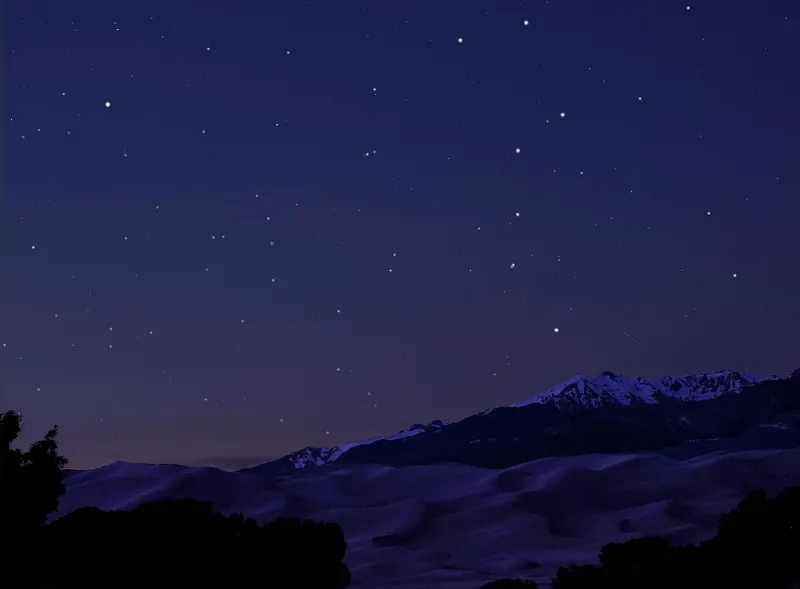
Photo by Photo by Олег Мороз on Unsplash on Unsplash
The brightest 'star' in the sky is often not a star. It might be Venus, shining like a headlight in the evening. It might be Jupiter, steady and cream-colored. It might be the International Space Station, sliding across the sky like a silent aircraft. Or it might be an airplane, blinking its way toward Chicago.
This is one of the most common surprises in backyard astronomy. The sky is full of bright points, and most of us are never taught how to tell them apart. The good news is that you do not need a telescope to sort them out. You need four clues: twinkle, color, motion, and timing.
1. Venus: The Creamy Headlight
Venus is the brightest planet in our sky, and it is often mistaken for a UFO or an unusually aggressive star. It is brilliant white with a slight creamy tint. It does not twinkle much because it is close enough and large enough to appear as a tiny disk rather than a point. You will usually find it near the horizon after sunset or before sunrise, following the ecliptic—the path the Sun and planets take across the sky.
2. Jupiter: The Steady Giant
Jupiter is bright, white, and remarkably steady. It can be visible for much of the night, and it does not flash or blink. With binoculars, you can often see its four largest moons as tiny points of light lined up beside it. If a bright 'star' refuses to twinkle and sits along the ecliptic, Jupiter is a good bet.
3. Mars: The Red One
Mars is not always bright, but when it is, its color gives it away. It has a distinct reddish-orange hue, and it shines steadily. Mars brightness varies a lot over time as Earth and Mars move around the Sun, so a reddish point that seems unusually bright for a few weeks may be Mars making a close approach.
4. Saturn: The Yellowish Wanderer
Saturn is softer and yellower than Jupiter, and it is usually not as dazzling. It still shines steadily and follows the ecliptic. With a small telescope, Saturn becomes unmistakable: the rings are visible, and the planet looks like a tiny teacup floating in space.
5. The International Space Station: The Fast One
The ISS is one of the most convincing impostors because it can be extremely bright. But it moves. The station crosses the sky in a few minutes, steadily and silently, usually without blinking. It can fade or disappear as it enters Earth's shadow. If a bright point is moving quickly and smoothly across the sky, check a satellite tracker. It might be the ISS.
6. Starlink and Other Satellites: The Slow Marchers
Starlink satellites and other spacecraft can look like moving stars. They usually travel steadily and silently, without the blinking strobes of an aircraft. Soon after launch, Starlink satellites can appear in a 'train'—a line of lights moving together across the sky. That sight is startling the first time you see it, but it is human technology, not a cosmic event.
7. Aircraft: The Blinking Ones
Aircraft are easy once you know what to look for. They blink. They have strobe lights, navigation lights, and sometimes landing lights. They may be red, green, or white. They move across the sky, and if they are low enough, you may hear them. A bright light that blinks irregularly is almost certainly an aircraft.
The Real Star Exception
Not every bright point is an impostor. Sirius, the brightest star in the night sky, can be spectacular. When it is low on the horizon, it often twinkles violently and flashes colors—red, blue, white—because its light is passing through a lot of atmosphere. That flashing can make Sirius look like a plane or a satellite, but its position and steady overall path give it away.
The Cosmology in a Wrong Guess
Every misidentification is a tiny lesson in cosmic scale. Venus is minutes away at the speed of light. The ISS is seconds away. Sirius is about eight and a half light-years away. The faintest stars you can see are hundreds or thousands of light-years away. The bright points in your sky are a mix of local solar system neighbors, human spacecraft, and distant suns.
So the next time you see a brilliant light and wonder what it is, do not assume it is a star. Check whether it twinkles. Check its color. Watch it move. Note the time. You may find that the sky is more crowded—and more interesting—than it first appears.