Goodbye, Orion: The Slow Unraveling of the Night Sky We Think We Know
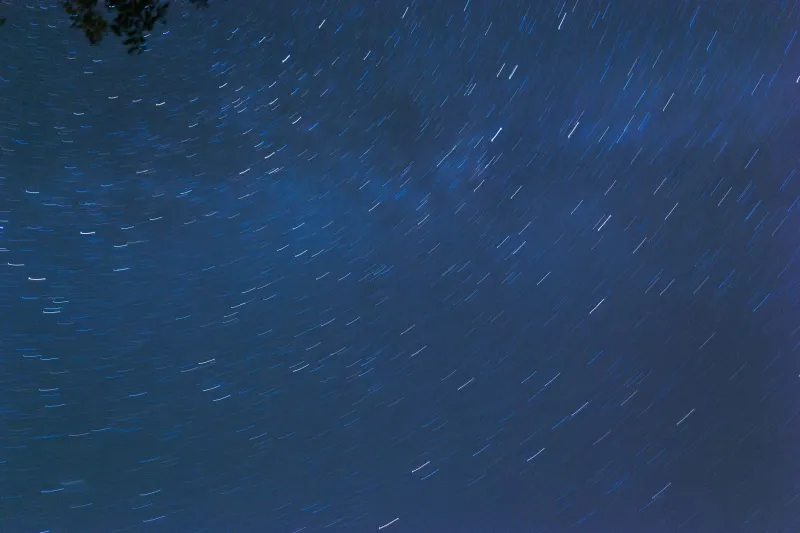
Somewhere around 50,000 years from now, a person — or whatever curious, sky-gazing being exists by then — will step outside on a clear night, look up, and see a sky that would be completely unrecognizable to us. The Big Dipper will be gone. Orion will be scrambled. Cassiopeia will have drifted into something new. The familiar patterns that humanity has used to tell time, navigate oceans, and spin myths for thousands of years will have dissolved, replaced by arrangements that no human culture has ever named.
This isn't speculation. It's physics. And it's one of the most quietly profound facts in all of astronomy.
Stars Are Not Fixed Points
The word constellation implies something permanent, a fixture of the universe as reliable as the laws of gravity. But that's an illusion created by the shortness of human lifespans relative to cosmic timescales.
Every star in the sky is moving. Not metaphorically — literally traveling through space at velocities that can range from a few kilometers per second to hundreds. From our vantage point on Earth, this motion appears as a slow angular drift across the sky, measured in a unit called proper motion: the tiny change in a star's apparent position over time, usually expressed in arcseconds per year.
For most stars, this motion is so small that it's invisible to the naked eye over a single human lifetime. But give it ten thousand years, or fifty thousand, and those small annual shifts accumulate into something dramatic. The constellations, it turns out, have an expiration date.
The Big Dipper's Slow Dissolution
Ursa Major offers one of the most well-documented examples of this process. The asterism we call the Big Dipper is actually composed of two different types of stars: five that form a genuine gravitational family called the Ursa Major Moving Group, traveling together through space, and two outliers — Dubhe and Alkaid — that are moving in entirely different directions.
Right now, those differences are invisible to us. The Dipper looks like a coherent shape because the stars happen to be arranged in a way that creates the familiar pattern from our current position in space and time. But Dubhe is drifting in one direction while Alkaid heads in another. Over the next 50,000 years, those diverging paths will stretch and distort the Dipper until the shape is no longer recognizable.
Simulations run by astronomers at various institutions have produced visualizations of this transformation. The bowl of the Dipper elongates. The handle curves differently. By around 100,000 years from now, the pattern we associate with the Big Dipper is essentially gone, replaced by a looser, more scattered arrangement of stars that future sky-watchers would have no reason to group together.
Orion Is Already Drifting
Orion might be the most recognizable constellation in the world. Betelgeuse, Rigel, the three-star belt — these are the landmarks of the winter sky for most Americans, and they've been cultural touchstones for civilizations stretching back to ancient Egypt, Mesopotamia, and beyond.
But Orion's stars are not a gravitational family. Unlike the Ursa Major Moving Group, the stars of Orion are simply in the same general direction from Earth — they're at wildly different distances, from a few hundred to a few thousand light-years away, and they're moving in different directions.
Betelgeuse, the red supergiant marking Orion's shoulder, has a significant proper motion that will carry it noticeably away from its current position over tens of thousands of years — assuming it doesn't explode first (it's a strong supernova candidate, though the timeline on that is uncertain). Rigel, at the opposite corner, is moving differently. The belt stars, Alnitak, Alnilam, and Mintaka, will gradually separate.
Give Orion 50,000 years and the famous hunter is unrecognizable. Give it 100,000 years and there's no reasonable way a future observer would group those stars together into the same pattern.
What Survives — And What Doesn't
Not all constellations dissolve at the same rate. Patterns made of stars that are genuinely close together in space, and moving in similar directions, tend to hold their shapes longer. True stellar associations — gravitationally linked groups — can maintain recognizable configurations for longer periods simply because their member stars share a common trajectory.
But even these eventually drift apart or shift relative to our changing vantage point. The Milky Way itself is moving through space, and Earth's position within the galaxy slowly changes over vast timescales. The sky of 50,000 years from now isn't just rearranged because the stars moved. It's rearranged because we moved too.
Some new patterns will emerge, of course. Random stellar arrangements will create new shapes that future observers will name and mythologize. They'll tell stories about the sky the way we do, never knowing that their sacred constellations are just as temporary as ours.
The Stars We're Already Losing
Here's the part that hits a little differently when you sit with it. Some of the stars we consider permanent fixtures are already near the end of their visible lives — not because they're dying, but because proper motion is carrying them toward the edges of our sky, or toward positions where they'll no longer form the patterns we recognize.
Alkaid, the star at the end of the Big Dipper's handle, is moving in a direction that will take it increasingly away from the rest of the asterism. Cassiopeia's distinctive W shape will distort as its member stars follow their individual paths. The Southern Cross, beloved by navigators in the southern hemisphere, will shift in ways that will make it unrecognizable to any southern sky-watcher 50,000 years hence.
These changes aren't happening on a timescale any living human will observe. But they're real. The sky we see tonight — the exact arrangement of stars that you'd see from your backyard right now — has never existed before in quite this form, and it will never exist again.
A Sky Worth Paying Attention To
There's something both melancholy and motivating about all of this. The constellations we've inherited — from Greek astronomers, from Indigenous stargazers, from Babylonian priests and Polynesian navigators — are temporary. They exist in a narrow window of cosmic time that happens to coincide with the entire span of human civilization so far.
We are, right now, living in the era of Orion and the Big Dipper and Cassiopeia. Future beings will have their own sky, their own patterns, their own stories. But this particular sky, this specific arrangement of light and distance and motion, belongs to us.
Maybe that's the best reason of all to go outside tonight and look up. Not because the stars will always be there. But because this version of them won't.