When Stars Steal: The Slow-Motion Heist Happening Across the Galaxy
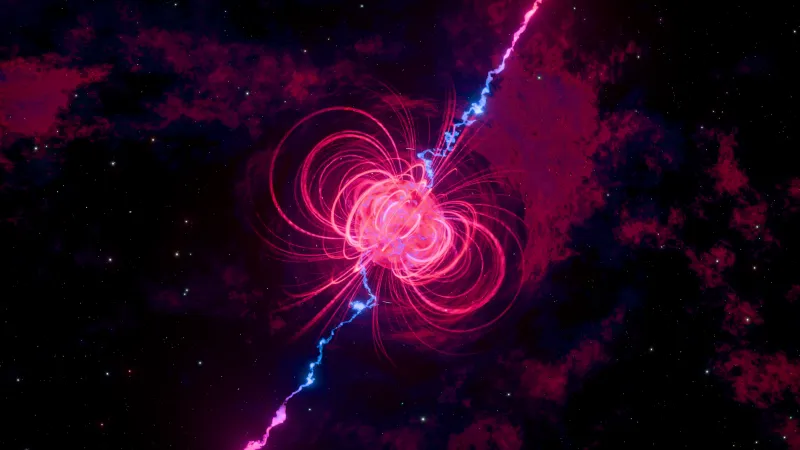
Imagine living next door to someone who, over the course of a million years, slowly siphons your house out from under you — brick by brick, room by room — until one day they explode from the excess. That's not a metaphor for a bad neighbor dispute. That's just Tuesday in a binary star system.
Across the galaxy, including in the stellar neighborhoods surrounding the Ursa Major region, pairs of stars are locked in gravitational embraces that turn quietly catastrophic. One star feeds. The other shrinks. And eventually, something gives.
This is the science of stellar mass transfer — and it's one of the most dramatic, underappreciated stories in all of astrophysics.
Most Stars Don't Fly Solo
Here's something that might surprise you: the majority of stars in the Milky Way aren't loners. They travel in pairs, triples, or even more complex arrangements, bound together by gravity from the moment of their formation. Our own Sun is actually the odd one out — a solitary star drifting through space without a companion.
Binary systems, where two stars orbit a shared center of mass, are extraordinarily common. And for a long time, astronomers assumed that these stellar partnerships were fairly stable — two stars living out their lives side by side, eventually fading into quiet remnants together.
Turns out, that picture was way too peaceful.
The Roche Lobe: Where Gravity Gets Greedy
To understand stellar theft, you need to know about something called the Roche lobe. It's not a physical object — it's a region of space around each star in a binary system where that star's gravity dominates. Think of it like each star's gravitational territory.
When a star expands — which they all do as they age and burn through their hydrogen fuel — it can start to push past the boundary of its own Roche lobe. Once that happens, the outer layers of that star no longer belong to it, gravitationally speaking. They fall toward the companion star instead.
What follows is a process called mass transfer, and it can last anywhere from a few thousand to several million years. Material streams from the bloated, aging star toward its hungrier neighbor, often forming a swirling disk of gas around the recipient called an accretion disk. These disks glow intensely — sometimes bright enough that we can detect them from Earth even when the individual stars themselves are too faint to see clearly.
The Thief Gets Heavier. And More Dangerous.
The star on the receiving end of all this material — called the accretor — doesn't just get bigger. It gets hotter, denser, and increasingly unstable. If the accretor is a white dwarf, a dense stellar remnant roughly the size of Earth packed with the mass of the Sun, the situation becomes especially volatile.
As hydrogen-rich material from the donor star piles up on the white dwarf's surface, pressure and temperature climb. The white dwarf can't burn this fuel steadily the way a normal star would. Instead, the accreted layer builds and builds until it reaches a critical threshold — and then it detonates in a runaway thermonuclear explosion on the surface.
That explosion is what we call a nova.
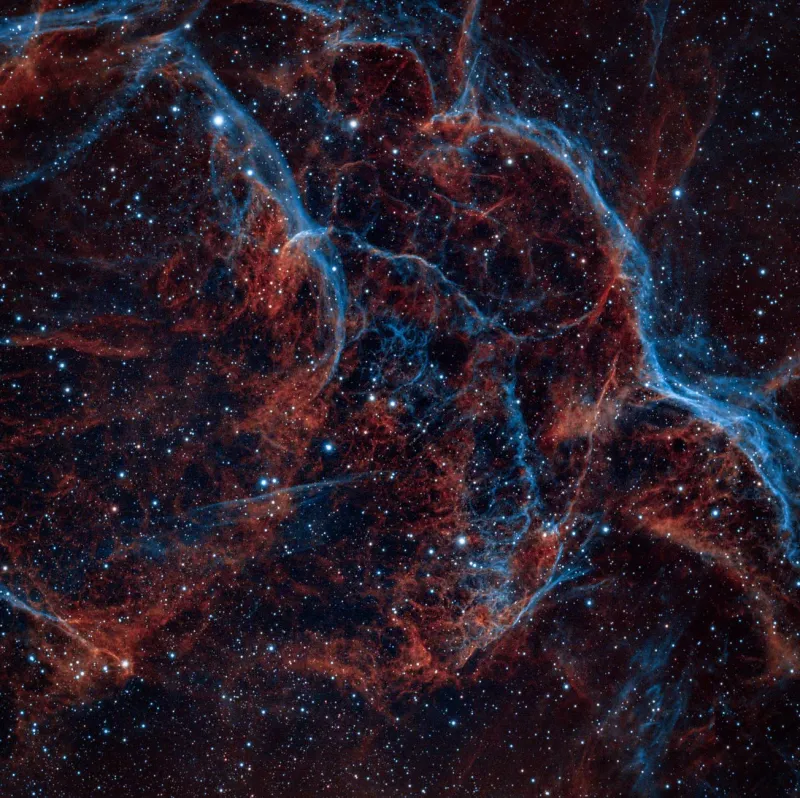
A nova isn't the complete destruction of the star — it's more like a violent belch. The white dwarf blasts the accreted material off its surface in a blinding flash that can briefly outshine entire star systems. Then, remarkably, the process starts over. The donor keeps feeding. The white dwarf keeps accumulating. Given enough time, some of these systems can produce recurring novas — explosions that repeat on timescales of decades or centuries.
There's a famous example called RS Ophiuchi that went nova in 1958, again in 1985, and most recently in 2021. Astronomers had their instruments ready that last time, and the data collected was extraordinary — a real-time window into the mechanics of stellar theft caught in the act.
When Theft Becomes Something Worse
Not every white dwarf settles for repeated surface explosions. Some are greedier.
If a white dwarf accretes enough mass to push past a specific limit — about 1.4 times the mass of our Sun, known as the Chandrasekhar limit — the entire star becomes unstable. Carbon fusion ignites throughout the white dwarf's core simultaneously, and the result isn't a surface explosion. It's total annihilation.
This is a Type Ia supernova, one of the most energetic events in the known universe. The white dwarf doesn't survive. It's completely obliterated, releasing more energy in a few seconds than our Sun will produce over its entire 10-billion-year lifetime.
Type Ia supernovae are so consistently bright that astronomers use them as "standard candles" — reliable distance markers for measuring cosmic distances. The very tools we use to map the large-scale structure of the universe, including the discovery of dark energy and the accelerating expansion of the cosmos, are built on understanding what happens when one star steals too much from another.
Stellar theft, in other words, helped us figure out the fate of everything.
What This Looks Like From Earth
You won't see a nova or a Type Ia supernova with the naked eye very often — these events are rare on human timescales, even if they're common on cosmic ones. But when they do happen, they're unmistakable. A star that wasn't visible one night can suddenly blaze into view the next, sometimes bright enough to be seen in daylight.
Historical records are full of these moments. Ancient Chinese astronomers documented "guest stars" — sudden bright points appearing where none had been before. Medieval European scholars recorded them with a mix of scientific curiosity and religious awe. Today, amateur astronomers across the US regularly monitor known binary systems, watching for the telltale brightness spikes that signal another round of cosmic larceny.
If you want to get involved, organizations like the American Association of Variable Star Observers (AAVSO) coordinate exactly this kind of citizen monitoring. Your backyard telescope could, genuinely, catch a nova in progress.
The Bigger Picture
What makes binary mass transfer so fascinating isn't just the violence of it — it's what it reveals about the connected lives of stars. We tend to think of stars as isolated objects, burning alone in the dark. But the universe doesn't really work that way. Stars interact, influence each other, and sometimes consume each other entirely.
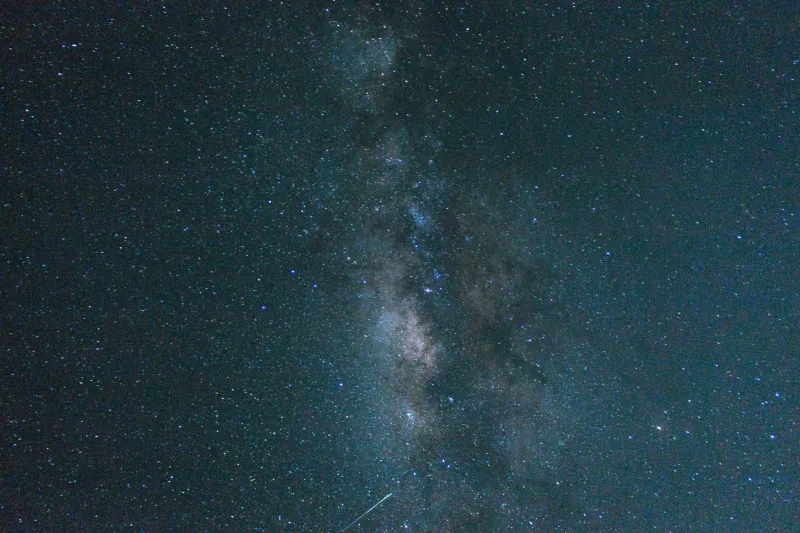
The Ursa Major region, with its rich collection of stellar associations and nearby star systems, is a prime hunting ground for understanding these dynamics. Many of the stars visible in that part of the sky are part of loose groupings that formed together, and within those groupings, binary pairs are common.
Every time one star siphons material from its partner, it's writing a new chapter in its own story — one that might end in a quiet fade, a spectacular explosion, or something that reshapes our understanding of how stars live and die.
The heist has been going on for billions of years. We're just now learning how to read the evidence.