Seven Stars, Spinning All Night: How the Big Dipper Became Humanity's First Clock
Seven Stars, Spinning All Night: How the Big Dipper Became Humanity's First Clock
Imagine you're a farmer in ancient Mesopotamia, a priest in a stone circle in Britain, or a military commander somewhere in the mountains of China — and you need to know exactly what time it is. No phone, no sundial (it's dark), no candle marked with hour lines. What do you do?
You look up. Specifically, you look for the Big Dipper.
For tens of thousands of years, the rotating position of Ursa Major around Polaris — the North Star — served as a precise, reliable, and always-visible clock for civilizations that needed to coordinate the rhythms of human life with the rhythms of the cosmos. Harvests, religious ceremonies, troop movements, and seasonal migrations were all scheduled against the slow, steady wheel of the northern sky. And the mechanism behind it is so clean and logical that once you understand it, you'll never look at the Dipper the same way again.
The Mechanics: Why the Sky Rotates Like Clockwork
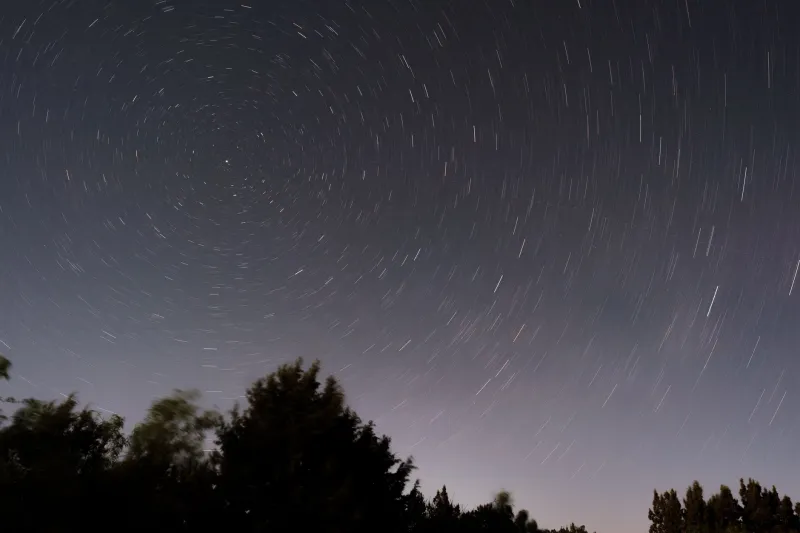
Here's the fundamental thing to understand: Earth spins on its axis once every 24 hours, and that axis points almost directly at Polaris. From our perspective on the ground, this makes the entire northern sky appear to rotate around that single fixed point — counterclockwise, if you're facing north in the Northern Hemisphere.
The Big Dipper, being close enough to Polaris that it never dips below the horizon for most of the continental United States, traces a full circle around the North Star every 24 hours. That's exactly 15 degrees of arc per hour. Think of Polaris as the pin at the center of a clock face, and the imaginary line connecting Polaris to the two outer stars of the Dipper's bowl — Merak and Dubhe, sometimes called the "Pointer Stars" — as the clock's hand.
Watch that line over the course of a night, and you'll see it sweep steadily through the sky. Ancient observers didn't need to know the math. They just needed to notice the pattern, remember the positions, and trust what they saw night after night, season after season.
How Different Cultures Decoded the Dipper's Movement
The ancient Egyptians called the stars of Ursa Major "the Imperishable Ones" — a name that reflected both their religious significance and their practical constancy. Egyptian priests used the circumpolar stars to orient temples and time nocturnal rituals. The alignment of certain monuments suggests a sophisticated understanding of how these stars moved through the hours of the night.
In ancient China, the Big Dipper — known as the "Northern Dipper" or Beidou — was one of the most important astronomical tools in the imperial arsenal. Chinese astronomers tracked the direction the Dipper's handle pointed at dusk across the seasons, using it as a seasonal calendar: handle pointing east meant spring, south meant summer, west meant autumn, and north meant winter. That's not just timekeeping within a night — that's timekeeping across a year.
Native American nations across the continent developed their own sophisticated relationships with Ursa Major. Many traditions tracked the Dipper's position to mark ceremonial seasons, determine planting times, and navigate across vast landscapes after dark. The stars weren't decoration. They were infrastructure.
In medieval Europe, monks used the circumpolar stars to time the canonical hours — the structured cycle of prayers that organized monastic life. Before mechanical clocks became widespread in the 14th century, knowing when to ring the bell for Matins at 2 a.m. or Lauds before dawn required someone to step outside and read the sky.
The 24-Hour Star Clock, Explained Simply
Here's how the basic system works, and how you can use it right now.
If you imagine a clock face centered on Polaris, with 12 o'clock pointing straight up (toward the zenith), you can estimate the position of the Pointer Stars on that dial at any given moment. The full circle represents 24 hours — not 12 — because the sky completes one rotation per day.
But there's a catch: the sky clock runs differently depending on the time of year. Because Earth is also orbiting the Sun, the stars appear to shift about one degree westward per day, or roughly two hours per month. Ancient timekeepers accounted for this by memorizing the "starting position" of the Dipper at a known reference date and adjusting their readings accordingly. Some cultures used the winter solstice as their reset point. Others used the spring equinox.
A simplified version still works for a backyard observer today. Go outside on a clear night, face north, and find Polaris (use the Pointer Stars to guide you — draw an imaginary line through Merak and Dubhe and extend it about five times the distance between them). Then note where the line from Polaris through the Pointer Stars is pointing. Straight up? It's roughly midnight in mid-autumn. Pointing to the right? Earlier in the evening. Pointing left? You're well into the small hours. With a little practice and a reference chart, you can get surprisingly close to the actual time.
Why This Still Matters
It's tempting to file this under "cool historical trivia" and move on. But there's something genuinely profound about what ancient stargazers figured out.
They didn't have instruments. They didn't have equations. What they had was patience, attention, and the willingness to look up consistently over months and years until the patterns revealed themselves. The Big Dipper didn't become a clock because someone invented it — it became a clock because someone noticed it. That distinction matters.
We live in an era when most Americans haven't deliberately looked at the night sky in weeks, maybe months. Light pollution, screens, and the general busyness of life have severed a connection that was, for most of human history, as natural as breathing. The Dipper is still up there, still spinning, still marking the hours with the same unhurried precision it always has.
The next time you're outside on a clear night — camping in the Rockies, sitting on a porch in rural Tennessee, or just standing in a dark corner of your backyard — look north. Find the two stars at the end of the Dipper's bowl. Draw that line to Polaris. And then just watch for a while.
You're reading the same clock that shepherds, soldiers, priests, and farmers read for thousands of years before you. That's not a small thing. That's the whole human story, written in light.
Try It Tonight
You don't need any equipment to get started. Here's a simple three-step approach:
- Find Polaris. Use the two outer stars of the Dipper's bowl (Merak and Dubhe) as a pointer. Extend that line about five times its own length and you'll land on Polaris.
- Note the Dipper's position. Is the handle swinging up, down, left, or right? Is the bowl above or below Polaris?
- Compare over time. Check the position an hour later. You'll see it's moved about 15 degrees — the same amount a clock hand moves in one hour.
For a more precise reading, look up a star clock chart for your latitude and the current month. Several free astronomy apps can show you what position the Dipper should be in at a given time, which makes it easy to reverse-engineer the process and confirm your naked-eye estimates.
The universe has been keeping time longer than we've been here to read it. It's nice to know we still can.