Seven Thousand Years of Sky: How the Big Dipper Ran the Ancient World
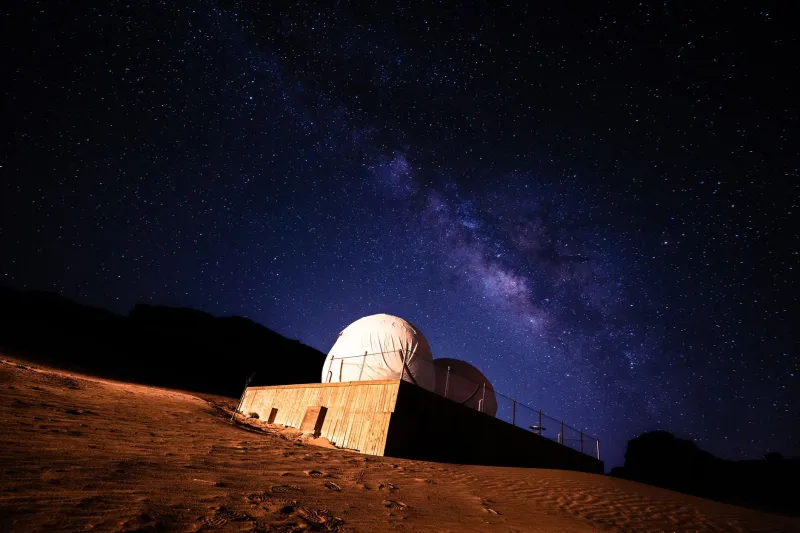
You probably know the Big Dipper as a reliable landmark for finding north on a camping trip or a dark backyard night. But for most of human history, those seven stars weren't just a navigation aid — they were a clock, a calendar, a planting guide, and in some cultures, a direct line to divine authority. The constellation we casually call Ursa Major was, for thousands of years, one of the most politically and agriculturally powerful objects in the sky.
That's not an exaggeration. Entire empires organized themselves around what that bear was doing overhead.
The Sky That Never Stops Moving (But Never Disappears)
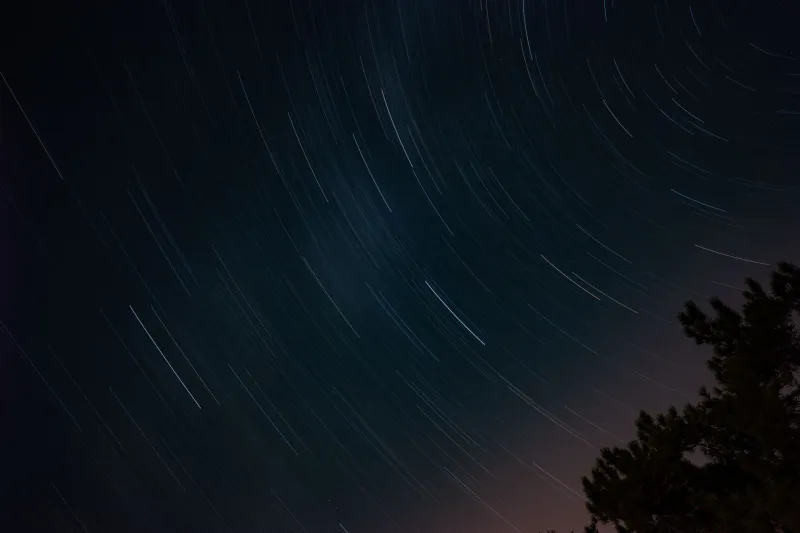
Here's the mechanic that made all of this possible. Ursa Major is what astronomers call a circumpolar constellation for most of the Northern Hemisphere — meaning it never dips below the horizon. It just wheels around Polaris, the North Star, in a slow, predictable circle, completing one full rotation roughly every 23 hours and 56 minutes. That's a sidereal day, slightly shorter than our solar day, which means the Dipper's position at any given hour shifts a little each night across the seasons.
Ancient sky-watchers didn't need equations to figure this out. They just watched, night after night, generation after generation, until the pattern became as readable as a sundial. The handle of the Dipper points downward in autumn evenings and swings upward in spring. That reliable rotation gave them something extraordinarily useful: a clock that reset itself with the seasons.
Modern researchers who study this intersection of archaeology and astronomy — a field called archaeoastronomy — have spent decades documenting just how deeply this knowledge was embedded in ancient cultures. The findings are, honestly, kind of humbling.
Egyptian Pharaohs and the Celestial Ox Leg
In ancient Egypt, Ursa Major wasn't a bear at all. It was Meskhetiu — the Foreleg of the Bull, or sometimes translated as the Ox Leg. Depictions of it appear on the ceiling of the tomb of Senmut, an architect under Pharaoh Hatshepsut, dating to around 1470 BCE. But the relationship goes back much further.
Egyptian priests used the circumpolar stars, including what we now call Ursa Major, to orient temple construction and to track the hours of the night during religious ceremonies. Some researchers believe the "stretching of the cord" ritual — used to align new temples — involved sighting along the circumpolar stars to establish true north. The pharaoh wasn't just building a temple; he was anchoring it to the cosmic order.
More practically, the position of these stars in the predawn sky helped priests track the agricultural calendar. The Nile flood, the planting season, the harvest — all of it needed precise timing, and the stars were the most reliable clock available.
Native American Traditions and the Rotating Sky
Across North America, Indigenous nations developed their own sophisticated relationships with Ursa Major long before European contact. The Lakota people referred to the stars of the Big Dipper as part of a larger celestial story that encoded seasonal knowledge into oral tradition. The position of the constellation at dusk signaled transitions between seasons — information that was life-or-death critical for communities dependent on bison migrations and plant cycles.
The Anishinaabe have traditions connecting the circumpolar stars to teachings about time and cyclical renewal. Among some Pueblo peoples of the American Southwest, the orientation of kiva structures appears to reflect careful attention to the northern sky, including the stars of Ursa Major.
What makes these traditions remarkable to archaeoastronomers is their precision. These weren't vague spiritual associations. They encoded real, testable astronomical observations passed down through story, ceremony, and architecture — a knowledge system that worked reliably for centuries without a single written equation.
The Greek and Roman Political Sky
By the time Greek and Roman writers were documenting the sky, the "clock" function of Ursa Major had been formalized into literature. Hesiod, writing around 700 BCE in his farming almanac Works and Days, used the rising and setting of specific stars — including those in Ursa Major — to tell Greek farmers when to plow, when to prune vines, and when to harvest grain.
This wasn't poetry dressed up as farming advice. It was a working agricultural calendar. Hesiod's star-based timing system was used practically across the Greek world for generations. When he wrote that the Pleiades' rising marked planting time, or that certain circumpolar positions signaled the arrival of winter, he was transmitting hard-won observational knowledge in a format that was easy to remember and share.
Roman generals later adapted similar celestial timing for military campaigns. The campaigning season — roughly spring through early autumn — mapped onto the same sky-based calendar farmers used. The stars that told you when to plant also told you when roads would be passable and rivers fordable.
How to Read the Clock Tonight
Here's where this history gets genuinely fun: you can step outside tonight and do exactly what Hesiod and the Lakota sky-watchers did. No equipment required.
Find the Big Dipper. If you're in the continental US, it's visible every clear night of the year. Now notice where the handle is pointing relative to the horizon. In spring evenings, the handle arcs upward and to the left — an old saying goes "arc to Arcturus" to find the bright star at the end of that arc. In autumn evenings, the handle droops downward.
Imagine Polaris as the center of a clock face. The two "pointer stars" at the outer edge of the Dipper's bowl — Merak and Dubhe — are your hour hand. Ancient sky-watchers used those two stars to read rough time at night, estimating how far they'd rotated from a known position. With practice, you can estimate the time within about half an hour using nothing but those stars and your memory of where they were the night before.
That's it. That's the clock that ran the ancient world.
Why This Still Matters
Archaeoastronomy sometimes gets dismissed as a niche academic hobby, but what it's actually documenting is one of the most consistent threads in human history: our species' drive to make sense of the sky and use that knowledge to survive and organize society. The same stars that anchored Egyptian temple walls guided Lakota seasonal movements and informed Greek farming schedules. They did it reliably, across wildly different cultures, because the sky itself is reliable.
We've swapped the star clock for atomic clocks and satellite calendars, which is obviously an improvement. But there's something worth sitting with in the fact that your ancestors — wherever they were from — looked up at these same seven stars and found meaning, order, and practical guidance.
The Big Dipper hasn't changed. It's still up there, still turning, still pointing the same direction it pointed when the first farmers decided to trust it with their harvest. All you have to do is look up.