Always Up There: The Science Behind Why Ursa Major Never Disappears From American Skies
Picture this: it's February, it's freezing, and you step outside just long enough to take out the trash. You glance up, half-expecting nothing but darkness, and there it is — that familiar ladle-shaped cluster of stars hanging in the northern sky like it's been waiting for you. Flash forward to a sticky July evening. Same stars. Same spot. Still there.
That's not a coincidence. That's geometry — and it's one of the coolest things about living where most Americans live.
Ursa Major, the Great Bear constellation that contains the beloved Big Dipper, is what astronomers call a circumpolar constellation. For the majority of the United States, it never sets. Not in winter, not in summer, not ever. While Orion vanishes into spring, and Scorpius ducks below the southern horizon for months, Ursa Major just keeps slowly circling overhead like the second hand on a cosmic clock. Always present. Always findable.
But why? The answer starts about 93 million miles away — and ends at your own backyard.
The Earth Has a Tilt, and That Changes Everything
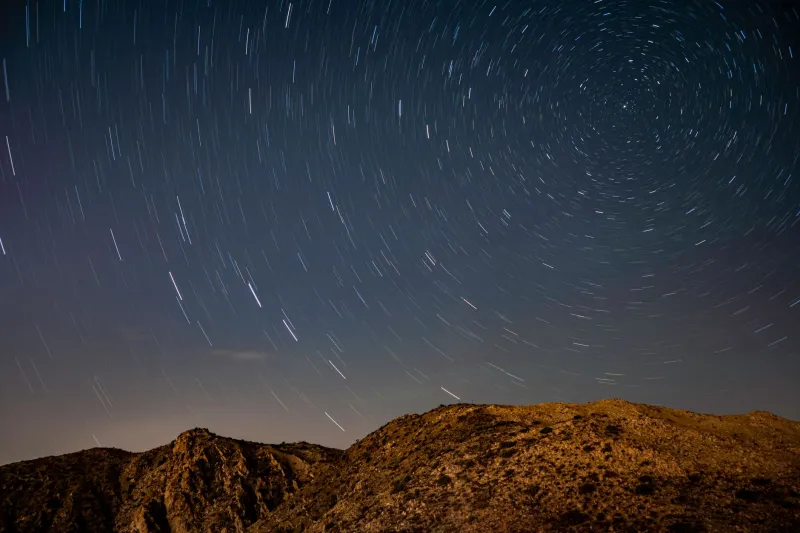
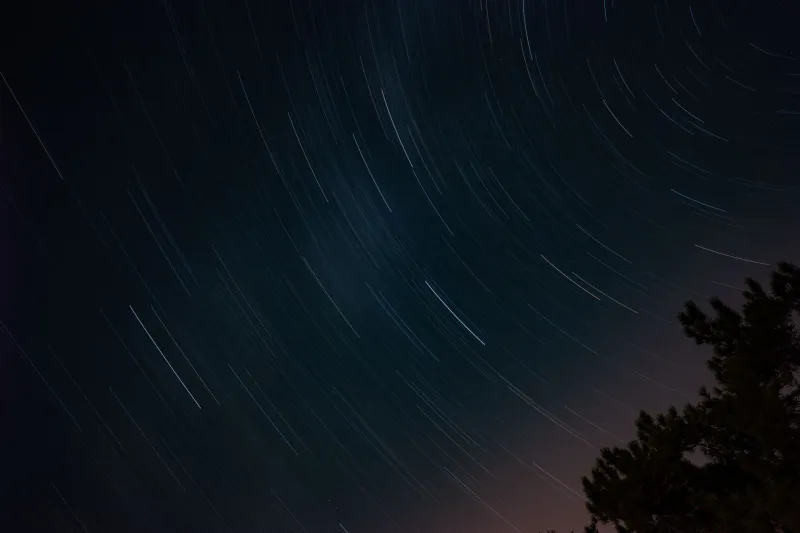
Here's the setup. Earth spins on an axis that's pointed — more or less — toward a spot in the northern sky near the star Polaris. As our planet rotates, the entire night sky appears to wheel around that fixed point. Stars near Polaris trace tight little circles. Stars farther away trace bigger arcs. And stars that are far enough from Polaris on the sky trace arcs so large that they dip below your horizon — disappearing for part of the night, or part of the year.
The key phrase there is "your horizon." And that's where latitude comes in.
If you're standing at the North Pole, Polaris sits directly overhead. Every star in the northern sky just spins around you in flat circles, never rising, never setting. The entire northern celestial hemisphere is circumpolar. Now start walking south. Polaris drops lower and lower in the sky. The circle of stars that never sets shrinks. Keep going until you hit the equator, and Polaris sits right on the horizon — and nothing is truly circumpolar anymore.
Most of the continental United States sits between roughly 25° and 49° north latitude. That's a sweet spot where the circumpolar zone is large enough to contain Ursa Major entirely.
The Math Is Simple, the Result Is Magic
Here's the rule astronomers use: a star or constellation is circumpolar for you if its angular distance from Polaris (called its polar distance) is less than your latitude.
Ursa Major spans a big chunk of sky, but its core stars sit roughly 25° to 40° away from Polaris. That means if you're at 40°N — which puts you around Denver, Indianapolis, or Philadelphia — even the farthest stars in the Great Bear never slip below your horizon. They just circle Polaris like slow-moving satellites, dipping toward the north in the wee hours and climbing high overhead by spring evenings.
Push north to Seattle, Chicago, or Boston (around 47°N), and Ursa Major has even more clearance. It wheels through the sky with plenty of room to spare.
Head south toward Miami or the Florida Keys — around 25°N — and things get tighter. The southernmost stars of Ursa Major skim uncomfortably close to the horizon during certain hours of the night, but for most practical stargazing purposes, the constellation is still technically circumpolar. You might catch its lower stars briefly touching the treeline, but they'll come back up. They always come back up.
Alaska, sitting well above 60°N in many places? Ursa Major practically owns the sky up there.
Why This Actually Matters for Stargazers
The practical upshot of all this celestial geometry is something genuinely useful: you never need to wait for the right season to find Ursa Major. It's there in January when you can see your breath. It's there in August when the fireflies are out. It's there at 9 PM and at 3 AM — just in different positions, having rotated around Polaris like the hour hand you never quite watch move.
This makes Ursa Major the ultimate anchor point for learning the night sky. Once you find the Big Dipper — those seven bright stars that form the Great Bear's hindquarters and tail — you can use it to locate Polaris by drawing a line through the two stars at the front edge of the Dipper's cup. From Polaris, you can find Cassiopeia. From the Dipper's handle, you can arc to Arcturus and then spike to Spica. Ursa Major is the hub from which so many star-hopping journeys begin.
And the fact that it's always there means you can start that journey on literally any clear night, without planning, without an app (though apps are great), and without any prior experience.
The Bear Wheels, But It Never Rests
One of the most satisfying things you can do is watch Ursa Major's position shift across a single night, or across the months. In early spring evenings, the Big Dipper rides high overhead, its handle pointing away to the east. By late autumn, it's crouched low in the northern sky, almost like it's drinking from the horizon. In between, it traces a slow, stately arc — the same arc it's been tracing for thousands of years, watched by people who had no idea what stars even were.
That continuity is part of what makes Ursa Major feel different from other constellations. Orion is dramatic, Scorpius is striking, the Southern Cross is exotic — but Ursa Major is reliable. It's the constellation equivalent of a trusted old friend who always picks up the phone.
For most Americans, that friend is literally never out of reach. On any clear night, no matter the month, no matter the hour, you can step outside, look north, and find the Great Bear right where you left it — slowly circling the pole, patient as ever, waiting for someone to look up.
How to Spot It Tonight
You don't need a telescope, a star chart, or even particularly dark skies. The Big Dipper's seven main stars are bright enough to punch through moderate light pollution, making them visible even from suburban backyards.
- Face north. If you're not sure which way north is, your phone's compass app works fine.
- Look for the ladle shape. Four stars form a rectangular cup; three form a curving handle.
- Give your eyes a few minutes to adjust. Even five minutes away from bright screens makes a huge difference.
- Check the time. In spring and summer evenings, the Dipper rides high. In fall and winter evenings, it sits lower in the north, sometimes closer to the horizon.
That's it. No special equipment, no planning, no ideal conditions required. Just a clear sky and a willingness to tilt your head back.
The bear is up there right now. It was up there last night. It'll be up there tomorrow. And that — in a universe full of fleeting, hard-to-catch wonders — is a genuinely beautiful thing.