Seven Stars, One Nation: The Big Dipper's Quiet Role in America's Most Defining Moments
Seven Stars, One Nation: The Big Dipper's Quiet Role in America's Most Defining Moments
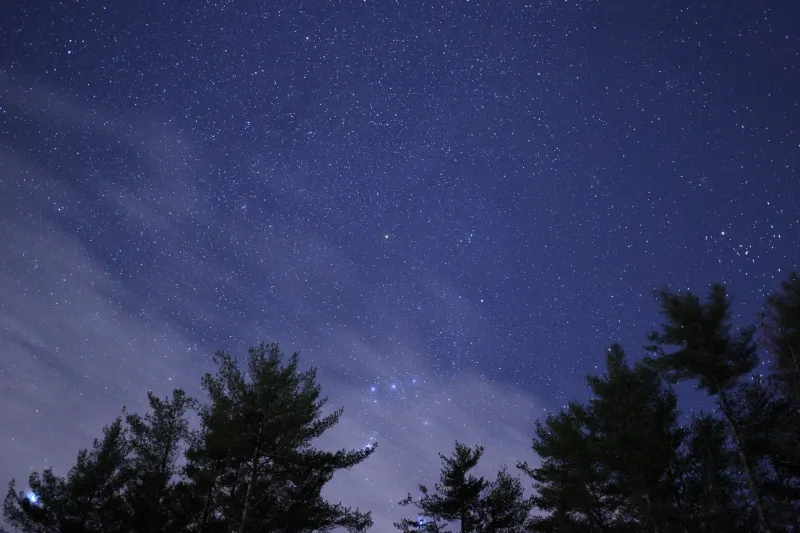
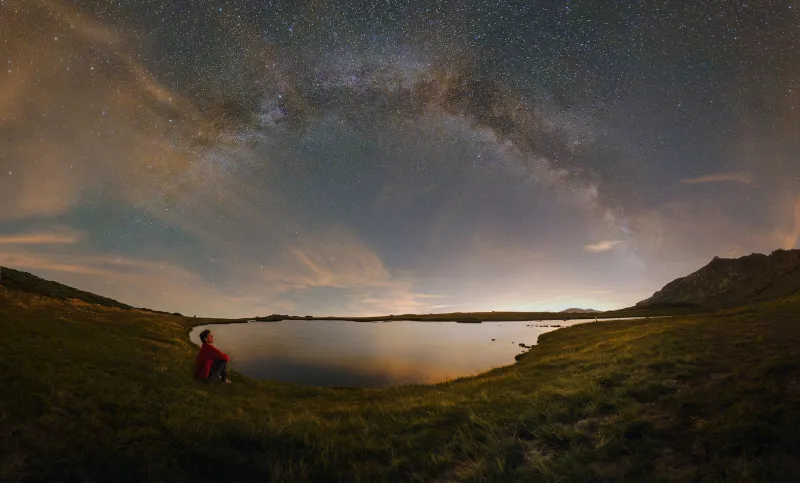
There's a good chance you can find it tonight. Step outside after dark, tilt your head up, and somewhere in the northern sky, those seven familiar stars will be waiting — the same seven stars that have hung over this continent through wars, migrations, revolutions, and moonshots. The Big Dipper doesn't move much. That's kind of the point. And for a surprisingly long stretch of American history, that steadiness meant everything.
This isn't just an astronomy lesson. It's a story about how one pattern of light quietly threaded itself through some of the most consequential chapters of the American experience — chapters that were happening on the ground while the stars kept watch overhead.
The Drinking Gourd and the Road to Freedom
Long before GPS, before road signs, before any of the navigational tools we take for granted, people moving through dangerous darkness needed something reliable. For enslaved people in the antebellum South attempting to escape north to freedom, the Big Dipper — known in the Black folk tradition as the "Drinking Gourd" — served as that anchor.
The practical astronomy here is elegant in its simplicity. The two stars that form the outer edge of the Dipper's bowl — Dubhe and Merak — are called the "pointer stars" for a reason. Draw an imaginary line through them and extend it outward, and you'll land almost exactly on Polaris, the North Star. Follow Polaris, and you follow north. Follow north long enough, and you cross into free territory.
Whether the well-known folk song "Follow the Drinking Gourd" was literally used as an escape map has been debated by historians, but the underlying astronomy was absolutely real and practically useful. Oral traditions among enslaved communities consistently referenced celestial navigation. The night sky was one of the few maps no slaveholder could take away.
There's something that hits differently when you look up at those seven stars knowing that. They weren't abstract points of light to people risking everything for freedom — they were directions. They were hope made visible.
Civil War Soldiers and the Stars Above the Camps
A few decades later, those same stars hung over a divided nation tearing itself apart. Union and Confederate soldiers alike would have grown up knowing the Big Dipper — it's one of the first star patterns most American children learn, and in the 1860s, far fewer people lived under the kind of light pollution that dims our modern skies.
Military officers on both sides used celestial navigation as a fundamental skill. Determining direction at night, orienting maps, understanding position — all of it relied on the same northern sky that freedom-seekers had used before them. The stars don't take sides. They just keep pointing north.
For the ordinary soldier lying awake in camp, homesick and afraid, the familiar shape of the Dipper overhead would have been one of the few constants. Same stars your family could see back home. Same stars that have always been there. In a war that shattered so much, that continuity wasn't nothing.
Westward Expansion and the Navigators Who Looked Up
As the country pushed its borders westward through the 19th century, the people doing that pushing — settlers, surveyors, scouts, and explorers — relied heavily on celestial navigation. The U.S. Army Corps of Topographical Engineers, tasked with mapping the American West, trained their officers in astronomical observation. Polaris, located via those same Dipper pointer stars, was a cornerstone of determining true north in terrain where landmarks were sparse and compasses could be unreliable.
John C. Frémont's famous expeditions across the Rockies and into California involved meticulous celestial observations. The maps that would eventually guide settlers westward were, in part, products of stargazing. The Big Dipper's pointer stars weren't just romantic symbols — they were working tools in the literal drafting of the American West.
NASA, Apollo, and the Return to the Stars
Fast forward to the mid-20th century, and the United States found itself in a very different kind of race — not westward across a continent, but upward, beyond the atmosphere entirely. The Space Race with the Soviet Union was as much about national identity as it was about science, and the astronauts selected to carry that identity into orbit needed to know the night sky intimately.
NASA's early astronaut training included serious work in celestial navigation. The program understood that in space, where GPS didn't yet exist and electronic systems could fail, the ability to orient a spacecraft using stars was a survival skill. Astronauts learned to identify key navigational stars, and circumpolar stars — those that never set below the horizon from mid-northern latitudes, including the stars of the Big Dipper — were especially valuable reference points.
The Apollo Guidance Computer carried a catalog of navigational stars used for alignment. Astronauts used a sextant-like device called the "telescope" and "scanning telescope" built into the command module to sight specific stars and feed data into the guidance system. Knowing the sky wasn't just an academic exercise — it was mission-critical.
There's a beautiful loop in that history. The same stars that once guided people northward to freedom were now helping human beings aim themselves at the Moon.
Why This Matters Tonight
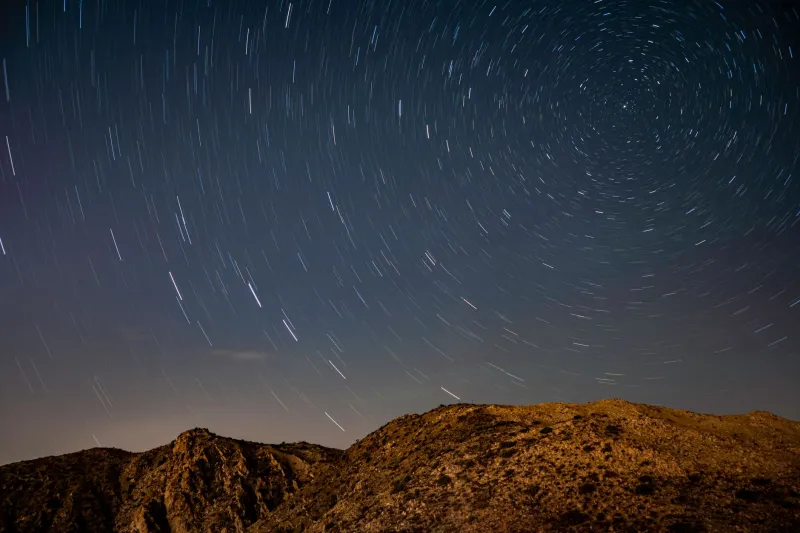
The Big Dipper is what astronomers call an asterism — technically not a standalone constellation, but part of the larger constellation Ursa Major, the Great Bear. It's circumpolar from most of the continental United States, meaning it never fully sets below the horizon. On any clear night, it's up there somewhere, rotating slowly around Polaris like a cosmic clock hand.
That permanence is what made it useful across so many different chapters of history. When the landscape was unfamiliar, when the road was unclear, when the mission was enormous and the stakes were high, people looked up and found those seven stars exactly where they expected them to be.
There's something quietly profound about that. We live in an era of extraordinary navigational technology — satellites, smartphones, real-time mapping. We rarely need the stars to tell us where we are. But the stars are still there, still pointing north, still doing what they've always done.
Next time you're outside on a clear night, take a minute to find the Dipper. Trace the line from Merak through Dubhe up to Polaris. You're doing the same thing that freedom-seekers did, that soldiers did, that surveyors did, that astronauts trained to do. You're connecting to a navigational tradition that runs through the heart of the American story.
Seven stars. One direction. Centuries of meaning.
Not bad for something you can see with your naked eye from your own backyard.