Two Bears, Ten Thousand Centuries: The Astonishing Human Story Written in Ursa Major and Ursa Minor
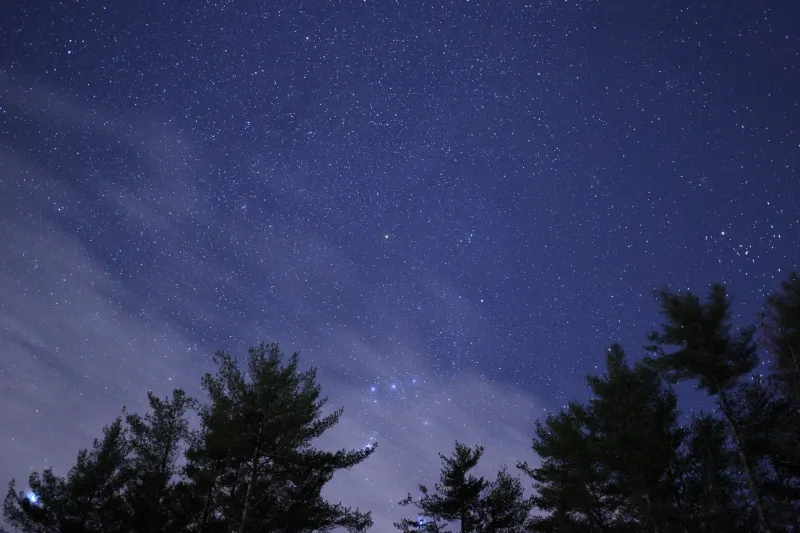
Look north on any clear night from anywhere in the continental United States, and you'll find them. Two constellations, circling the celestial pole like slow, patient sentinels. They've been up there every night of your life. Every night of your parents' lives. Every night of every human life going back to a time when our species was still figuring out what it meant to be human.
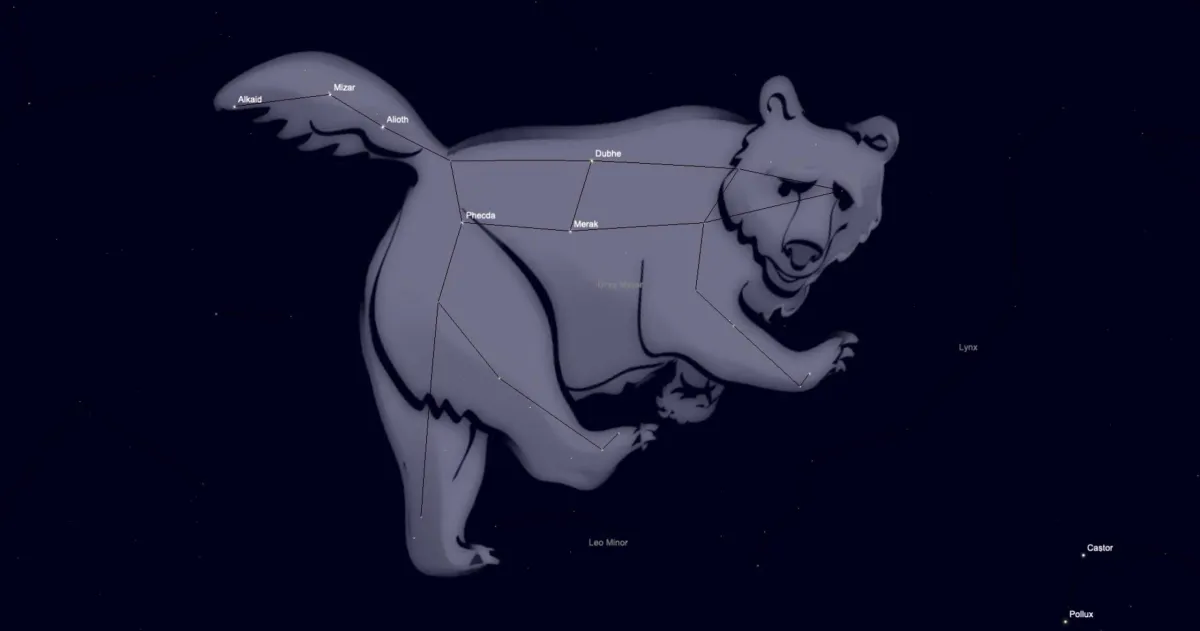 Photo: Ursa Minor, via lovethenightsky.com
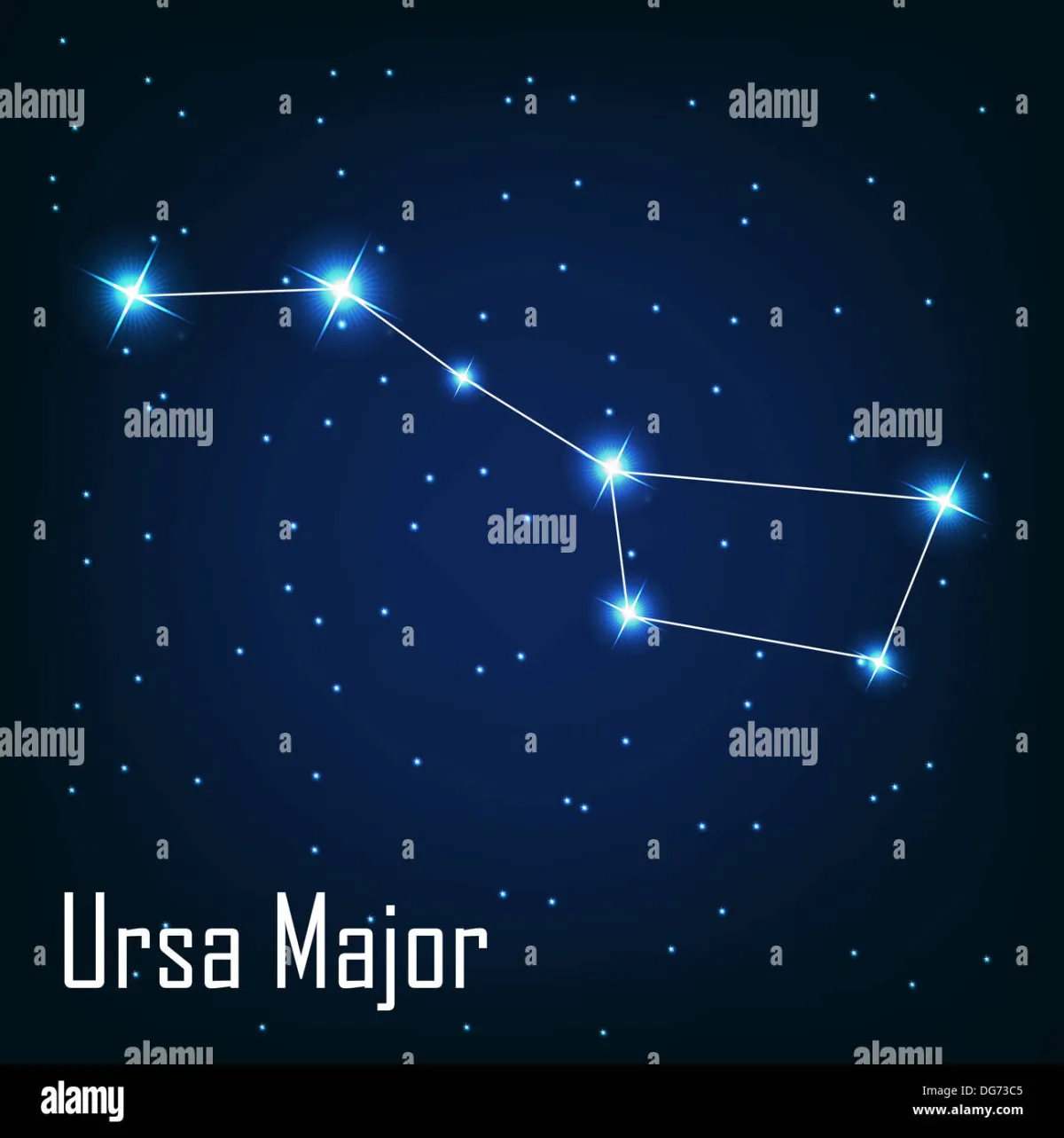 Photo: Ursa Major, via c8.alamy.com
Ursa Major and Ursa Minor — the Great Bear and the Little Bear — aren't just star patterns. They're a kind of cosmic thread connecting us to something almost incomprehensibly old. Pulling on that thread takes you through Indigenous American oral tradition, Greek mythology, the Underground Railroad, and all the way back to a moment roughly 100,000 years ago when early humans may have first looked up and seen a bear in the northern sky.
That's the thing about these two constellations. They don't just show you where north is. They show you who we are.
Older Than Greece, Older Than Writing
Most people associate constellation lore with ancient Greece, and fair enough — the Greeks gave us a lot of the star stories that astronomy still uses today. But the bear identification for Ursa Major almost certainly predates Greek culture by tens of thousands of years.
Here's the clue that tipped off researchers: cultures separated by entire oceans, with no known contact, independently identified this same star grouping as a bear. Indigenous peoples across North America — including the Iroquois, the Micmac, and several Algonquian-speaking nations — saw a bear in those stars. So did ancient Greeks. So did Siberian cultures. So did some Bronze Age European traditions.
The probability of that happening by coincidence is essentially zero.
One compelling theory, developed by astronomers and anthropologists including Duane Hamacher and others studying archaeoastronomy, suggests this shared identification may trace back to a single ancestral population — possibly in northeastern Asia — before humans migrated into the Americas across the Bering land bridge. If that's right, the bear in the northern sky is at least 14,000 years old as a cultural concept. Some researchers push the idea even further, arguing the tradition could be 100,000 years old or more, rooted in early Homo sapiens behavior in Africa before the great migrations.
Think about that the next time you're standing in your backyard squinting at the Big Dipper.
The Greek Story (And Why It's Surprisingly Dark)
When Greek mythology got hold of Ursa Major, it spun a tale that was, honestly, kind of a mess — which is very on-brand for Greek mythology.
The most common version centers on Callisto, a nymph and hunting companion of the goddess Artemis. Zeus, being Zeus, became obsessed with her. The resulting story involves deception, transformation, and divine jealousy depending on which ancient author you're reading. In most versions, Callisto is turned into a bear — either by Zeus trying to hide her, by Hera exacting revenge, or by Artemis punishing her. Her son, Arcas, later nearly kills her while hunting, not recognizing his own mother. Zeus intervenes, transforming Arcas into a smaller bear (Ursa Minor) and flinging them both into the sky.
Hera, still furious, convinces the sea gods to never let the bears rest below the horizon — which is why, from mid-northern latitudes, both Ursa Major and Ursa Minor are circumpolar constellations. They never set. They circle the pole all night, every night, denied even the rest of dipping below the horizon.
It's a strange, melancholy origin story for two of the sky's most reassuring landmarks.
The Stars That Pointed Toward Freedom
By the 19th century, Ursa Major had taken on a meaning that had nothing to do with mythology and everything to do with survival.
Enslaved people in the American South used the Big Dipper — the most recognizable asterism within Ursa Major — as a navigation tool on the Underground Railroad. The Drinking Gourd, as it was called in some traditions, pointed toward Polaris, the North Star, which sits at the end of Ursa Minor's handle. Follow the Drinking Gourd north, and you were heading toward free states and, eventually, Canada.
The spiritual "Follow the Drinking Gourd" encoded this directional knowledge in song, allowing it to be passed along without written instructions that could be discovered and confiscated. Whether the song itself was used as a literal navigation guide or whether that's partly folklore built up over time is debated by historians — but the underlying astronomical fact is solid. The Big Dipper's two "pointer stars" (Dubhe and Merak) draw a line directly to Polaris, accurate enough to navigate by on a clear night.
That two stars could represent the difference between bondage and freedom is one of the most powerful things astronomy has ever meant to actual human beings.
Polaris and the Little Bear's Cosmic Job
Ursa Minor's fame rests almost entirely on one star: Polaris, the North Star, which sits within about three-quarters of a degree of the true celestial north pole. Because Earth's axis points almost directly at it, Polaris barely moves as the night progresses. Every other star wheels around it. Sailors, explorers, and travelers have used it to find north for millennia.
But here's something worth knowing: Polaris wasn't always the North Star, and it won't always be. Earth wobbles on its axis in a slow cycle called precession, completing one wobble roughly every 26,000 years. Around 3000 BCE, a star called Thuban in the constellation Draco served as the pole star. In about 12,000 years, the brilliant star Vega will take the job. Polaris is just the current shift worker in a very long rotation.
Ursa Minor itself is a faint constellation — harder to see than Ursa Major, especially from light-polluted suburbs. But under dark skies, the Little Dipper's distinctive ladle shape becomes visible, with Polaris at the tip of its handle.
How to Find Both Bears Tonight
You don't need a telescope, an app, or any prior experience. Here's how to spot both bears from anywhere in the lower 48, any clear night of the year.
Step one: Find the Big Dipper. This is the most recognizable star pattern in the northern sky for most Americans. It looks exactly like a kitchen ladle — four stars forming the bowl, three forming the handle. In spring evenings, it arcs high overhead. In fall, it sits lower in the north. It's always there; just scan the northern sky.
Step two: Use the pointer stars. The two stars forming the outer edge of the Big Dipper's bowl — Dubhe (top) and Merak (bottom) — form a line. Extend that line outward from the bowl about five times the distance between those two stars. You'll land on Polaris, a moderately bright star sitting alone.
Step three: You've found Ursa Minor. Polaris is the tip of the Little Dipper's handle. From Polaris, look for a fainter, smaller ladle curving away — the bowl opens toward the Big Dipper. The Little Dipper's stars are dim, so give your eyes 10-15 minutes to adjust to the dark.
Step four: Trace Ursa Major. The Big Dipper is just the back and tail of the Great Bear. The full constellation extends forward from the bowl — look for fainter stars tracing the bear's legs and head in front of the Dipper's bowl. It's a large, sprawling figure, and seeing it takes a bit of imagination, but that's kind of the point.
Stand outside on a clear night, find those two bears, and know that you're doing something humans have done for longer than recorded history. Same stars. Same sky. Same quiet sense that the universe is enormous and we are small and somehow that's not terrifying — it's wonderful.
That feeling has a hundred thousand years of practice behind it.