LGM-1, the Wow! Signal, and Other Times the Universe Called and Nobody Answered
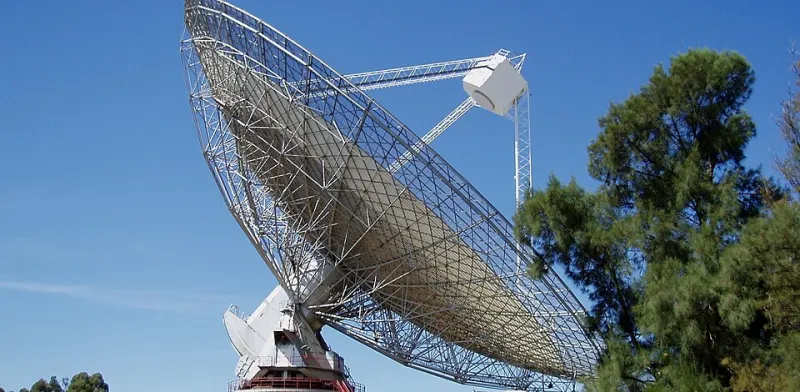
Photo: Amanda Slater, CC BY-SA 2.0, via Wikimedia Commons
Radio astronomy is basically the art of listening to static. The universe hums with noise — quasars, lightning, microwave ovens in the observatory break room. So when something sharp, structured, or inexplicable cuts through the hiss, astronomers pay attention. Sometimes with excitement. Sometimes with mild panic.
Here's a field guide to the detections that made scientists do a double take.
LGM-1: The Signal That Was Almost Aliens
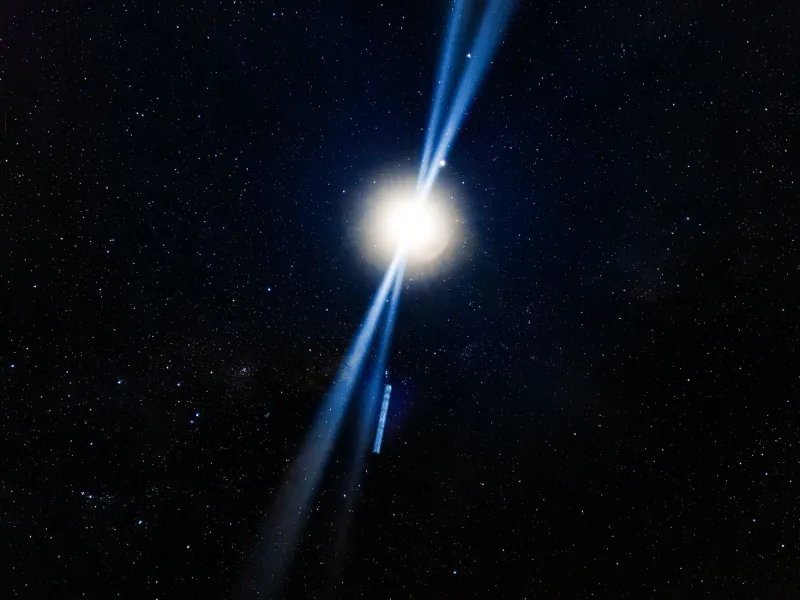
In 1967, Cambridge graduate student Jocelyn Bell Burnell noticed something odd in her radio data: a pulse of energy arriving every 1.33 seconds, metronome-precise. No known natural process was that regular. For a brief, giddy moment, the research team entertained the obvious thought — could this be a beacon from another civilization?
They nicknamed it LGM-1, for 'Little Green Men,' half-joking and half-covering their bases.
The answer turned out to be almost better than aliens: the signal came from a pulsar, the rapidly spinning corpse of a massive star, sweeping radio beams across the galaxy like a lighthouse. The discovery opened an entire field of physics — these dead stars are laboratories for matter at densities impossible on Earth. Bell Burnell's paper scrap of data is now one of the most famous pieces of astrophysical evidence ever collected.
The Wow! Signal: 72 Seconds, No Encore
August 15, 1977. The Big Ear radio telescope in Ohio — yes, Ohio — recorded an intense, narrowband radio shout from the direction of Sagittarius. It lasted 72 seconds, the exact length of the telescope's observation window, and it was dozens of times stronger than background noise. When astronomer Jerry Ehman reviewed the printout, he circled it and wrote one word in the margin: 'Wow!'
Here's what made it tantalizing: the frequency sat right near the 1420 MHz hydrogen line, a wavelength SETI researchers had long suggested any intelligent broadcaster might choose. And the signal never repeated. Decades of follow-up observations, from Big Ear and every major radio dish since, have turned up nothing.
Leading explanations today include an Earth-orbiting comet's hydrogen cloud, or some exotic atmospheric phenomenon — but nothing has been definitively confirmed. The Wow! signal remains the most compelling 'unexplained' detection in radio astronomy: probably natural, possibly not, definitely never repeated.
Fast Radio Bursts: The Millisecond Mysteries
In 2007, astronomer Duncan Lorimer found something strange buried in archival data: a blast of radio energy lasting about five milliseconds that packed the punch of the Sun releasing weeks of energy. A fast radio burst, or FRB.
The scariest part? Nobody knew what they were or where they came from. For years, FRBs appeared once and vanished. Then, in 2016, one was caught repeating — which ruled out the most violent one-time cataclysms and pointed toward something like a hypermagnetized neutron star.
Today, thousands have been catalogued, and some have been traced to specific galaxies billions of light-years away. We've even used them as tools: because the bursts sweep through intergalactic gas on their way to us, they let astronomers weigh the 'missing' ordinary matter of the universe. The mystery has matured into a measurement. But what actually launches them? Still an open file.
'Oumuamua: The Visitor That Didn't Send a Signal at All
In October 2017, astronomers in Hawaii spotted the first confirmed interstellar object ever detected in our solar system. It tumbled end-over-end, brightened and dimmed oddly, accelerated slightly as it left the Sun's vicinity — with no comet tail to explain the push.
Harvard astronomer Avi Loeb famously suggested it might be artificial: a lightsail, a probe, debris from someone else's technology. Most researchers favored a natural explanation — hydrogen ice outgassing, or a nitrogen iceberg fragment from an alien Pluto — but the honest answer is that we'll never know. 'Oumuamua is already light-years away, too small and too dark to study again.
Why the Mysteries Matter
Notice the pattern. Every one of these detections forced astronomy to either discover something new — pulsars, FRBs — or sharpen its tools for separating signal from noise. Even the unsolved cases do work: they define the boundary of what we know, which is exactly where the next discovery lives.
The universe calls sometimes. Usually it's just physics on the line. But you have to pick up every time — because the one call you ignore might be the interesting one.