The Night the Universe Stopped Revolving Around Us
It's easy to look back and laugh at geocentrism — the idea that the Sun, the planets, and all the stars revolve around the Earth. We learn in grade school that Copernicus figured it out in the 1500s, Galileo got in trouble for agreeing with him, and then science moved on. Simple, clean, done.
Except it wasn't done. Not by a long shot.
The Copernican model — with the Sun at the center of the solar system — took nearly two centuries to fully displace its predecessor. And even after heliocentrism became the consensus among educated Europeans, serious questions lingered about Earth's position in the broader cosmos. Was our Sun at the center of the entire universe? Was our galaxy the whole show? These weren't fringe questions. They were live scientific debates, and some of the most important answers came from American soil, through American telescopes, operated by American astronomers who were willing to follow the data wherever it led.
Copernicus Started Something He Couldn't Finish
Nicolaus Copernicus published his heliocentric model in 1543, the same year he died. He placed the Sun at the center of the solar system and demoted Earth to just another orbiting planet. It was a revolutionary idea, but it still left a lot of questions unanswered — and it still implicitly assumed that our solar system occupied a special, central position in the cosmos.
For most of the following three centuries, that assumption went largely unchallenged. The universe seemed to be made of stars, and those stars seemed to be arranged more or less uniformly around us. Even as telescopes improved and astronomers catalogued thousands of nebulae — fuzzy patches of light that didn't resolve into individual stars — the dominant view was that everything we could see was part of one big system, and we were somewhere near the middle of it.
This idea had a name: the Milky Way as the entire universe. And it persisted well into the twentieth century.
The Great Debate and the Observatory That Changed Everything
In 1920, the Smithsonian Institution in Washington, D.C., hosted what became known as the Great Debate — a formal scientific confrontation between two astronomers with opposing views on the scale of the universe.
Harlow Shapley argued that the Milky Way was enormous — much larger than previously thought — and that the fuzzy spiral nebulae seen through telescopes were small objects within or near our galaxy. Heber Curtis argued the opposite: that the spiral nebulae were actually entire galaxies, comparable in size to the Milky Way, and that the universe was vastly larger than anyone had assumed.
Neither man had quite enough evidence to definitively win the argument that night. But the evidence was being gathered, patiently and methodically, at an observatory perched in the mountains above Los Angeles.
Mount Wilson Observatory, built by the Carnegie Institution and completed in the early 1900s, was at the time home to the most powerful telescopes in the world. Its 100-inch Hooker Telescope, completed in 1917, gave astronomers an unprecedented ability to resolve detail in distant objects. And it was there, in 1923, that Edwin Hubble did something that permanently and irrevocably ended the debate about Earth's cosmic centrality.
Hubble's Yardstick
Hubble was examining photographic plates of the Andromeda Nebula — one of the brightest and most studied of the spiral nebulae — when he identified a specific type of star called a Cepheid variable. These stars pulse in brightness at a rate directly related to their intrinsic luminosity, making them reliable distance markers. Astronomer Henrietta Swan Leavitt, working at Harvard College Observatory, had discovered this relationship years earlier — one of the foundational contributions to modern astronomy, made by a woman who was initially hired to do computational work and paid a fraction of what her male colleagues earned.
Using Leavitt's period-luminosity relationship and his own observations from Mount Wilson, Hubble calculated the distance to the Andromeda Cepheid. The answer was staggering: roughly 900,000 light-years away. (Modern measurements put it closer to 2.5 million light-years, but even Hubble's underestimate was enough to prove the point.) Andromeda was far, far outside the boundaries of the Milky Way. It wasn't a nebula within our galaxy. It was an entire galaxy in its own right.
With that single measurement, the universe grew by an incomprehensible factor. The Milky Way was no longer the universe — it was one galaxy among what we now know to be hundreds of billions.
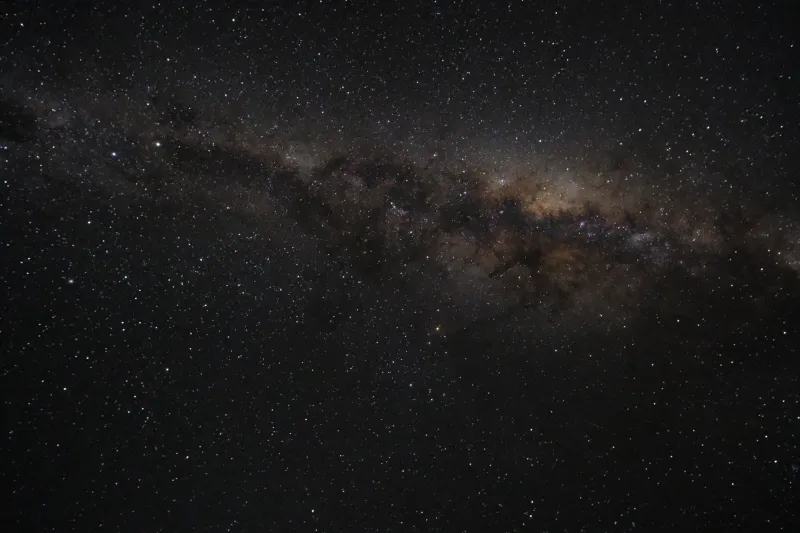
And Earth? Earth was orbiting a fairly ordinary star, located in the outer suburbs of one of those countless galaxies. No center. No special position. Just here, somewhere in the middle of an enormous, indifferent cosmos.
What It Actually Took to Accept This
It's worth pausing on what this discovery required. Hubble didn't just point a telescope at the sky and announce a result. He was building on decades of work by dozens of researchers — Leavitt's distance-measuring breakthrough, Vesto Slipher's earlier spectroscopic observations of spiral nebulae at Lowell Observatory in Arizona, the institutional investment that built Mount Wilson in the first place.
American astronomy in the early twentieth century had a particular energy to it — well-funded, institutionally ambitious, and increasingly willing to take on the biggest questions in science. The combination of private philanthropy (Andrew Carnegie's money built Mount Wilson), rigorous academic culture, and genuinely world-class instrumentation created conditions where paradigm-breaking discoveries weren't just possible; they were almost inevitable.
Hubble's 1923 result was confirmed and extended over the following years. By 1929, he had published his observations of galactic recession — the discovery that distant galaxies were moving away from us at speeds proportional to their distance, the observational foundation of what we now call the expanding universe and the Big Bang model.
The Delusion That Took Two Thousand Years to Correct
Geocentrism wasn't stupid. It was a reasonable inference from limited observations, built up over millennia by some of the sharpest minds in human history. The stars do appear to circle the Earth every night. The Sun does appear to rise and set. Without a telescope, without the ability to measure stellar parallax or galactic distances, the geocentric model fit the available data pretty well.
What ended it wasn't a single genius moment. It was a long accumulation of better tools, better data, and scientists willing to follow the evidence past the point of comfort — including the American astronomers and observatories that delivered the final, definitive blows.
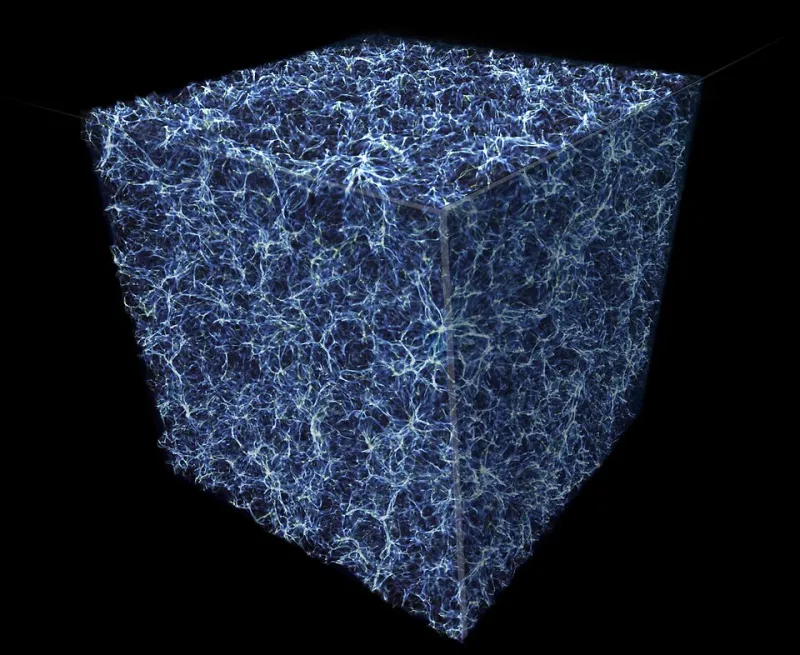
Today, we know that Earth orbits the Sun, which orbits the center of the Milky Way, which is one galaxy in the Local Group, which is one cluster in the Virgo Supercluster, which is one region of the Ursa Major Supercluster, which is one small part of the observable universe.
We are not the center of anything. And honestly? That's one of the most liberating discoveries science has ever made.