Thread by Thread: The Cosmic Web That Connects Everything You'll Never See
Picture the biggest thing you can imagine. A mountain, maybe. An ocean. The continental United States spreading coast to coast. Now throw all of that out, because the structure we're about to talk about makes every one of those things look like a grain of sand on a beach that doesn't have a name yet.
The universe, it turns out, is not a random scattering of galaxies floating in emptiness. It's organized — almost obsessively so — into a vast interconnected architecture that astronomers call the cosmic web. And understanding it means rethinking what it means to have an address in the universe.
What Even Is a Supercluster?
Let's start close to home. The Ursa Major Supercluster — the one this site is named after — is already a mind-bending structure. It's a gravitationally associated collection of galaxy groups and clusters spread across hundreds of millions of light-years. Our own Milky Way sits within it, part of a local group of galaxies that feels enormous until you zoom out and realize it's basically a suburb.
But superclusters are not the top of the hierarchy. They're more like neighborhoods within a city — and the city is the cosmic web itself.
The cosmic web is the large-scale structure of the entire observable universe. It's made up of three main features: filaments, which are long, thread-like strands of galaxies and dark matter; nodes, which are dense intersections where filaments cross and superclusters tend to cluster; and voids, which are vast, nearly empty regions of space that can stretch hundreds of millions of light-years across.
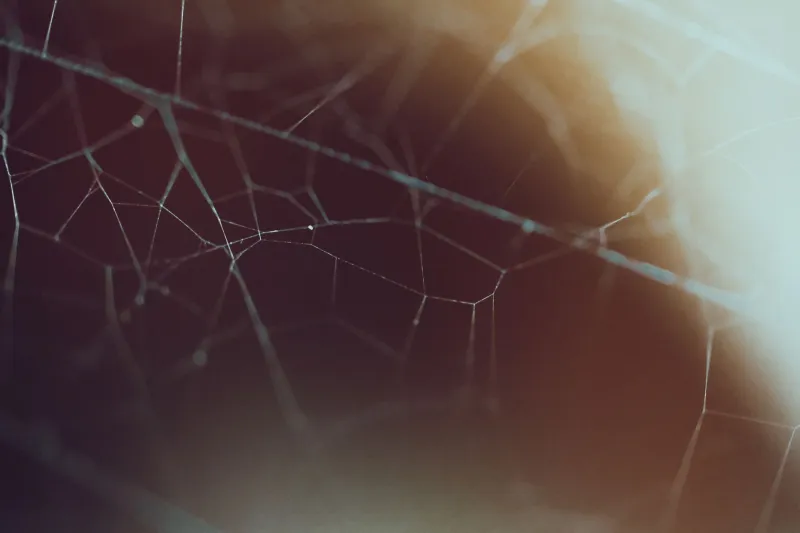
Think of it like a three-dimensional spider's web — except the spider is gravity, the silk is dark matter, and the dewdrops are entire superclusters of galaxies.
How Astronomers Actually Built This Map
Mapping something this enormous required tools that didn't exist a century ago, and honestly, some that barely exist now.
The first big breakthrough came through redshift surveys. When a galaxy is moving away from us, its light stretches toward the red end of the spectrum. By measuring how redshifted a galaxy's light is, astronomers can calculate how fast it's receding — and from that, estimate its distance. Do this for hundreds of thousands of galaxies, plot them in three-dimensional space, and you start to see the web emerge.
The CfA Redshift Survey in the 1980s was one of the first to reveal that galaxies weren't randomly distributed. They clumped into what researchers called the "Great Wall" — a sheet of galaxies stretching 500 million light-years. It was the largest known structure at the time, and it completely upended assumptions about cosmic uniformity.
Since then, projects like the Sloan Digital Sky Survey (SDSS) have mapped hundreds of millions of galaxies, giving us the most detailed picture yet of the cosmic web's structure. More recently, instruments like the Dark Energy Spectroscopic Instrument (DESI) are pushing that map even further, adding depth and precision that earlier surveys couldn't achieve.
And none of it would be possible without computing power. The datasets involved are staggering — processing them requires algorithms and machine learning tools that only became viable in the last couple of decades.
Beyond the Ursa Major Supercluster
So what's actually out there, past our supercluster's edges?
Not far beyond (cosmically speaking), lies the Virgo Supercluster, which contains the Virgo Cluster — a gravitationally dominant collection of more than 1,300 galaxies. For a long time, astronomers thought the Virgo Supercluster was our home supercluster. Then, in 2014, a team led by Brent Tully at the University of Hawaii redefined the boundaries of what they called Laniakea — a Hawaiian word meaning "immeasurable heaven."
Laniakea is a supercluster of superclusters. It contains the Milky Way, the Virgo Supercluster, and hundreds of thousands of other galaxies, all slowly drifting toward a gravitational focal point called the Great Attractor. The whole thing spans about 520 million light-years.
And Laniakea itself? It's a node on a filament of the cosmic web, surrounded by neighboring superclusters like the Perseus-Pisces Supercluster, the Coma Supercluster, and the Shapley Concentration — one of the most massive concentrations of matter in the observable universe, sitting about 650 million light-years away.
The Voids: The Part Nobody Talks About
For every filament, there's a void. These aren't just empty patches of sky — they're enormous, coherent regions of space where galaxy density drops to almost nothing. The Boötes Void, discovered in 1981, is roughly 330 million light-years across and contains almost no galaxies. If the Milky Way had formed inside the Boötes Void, we might not have discovered other galaxies until the 20th century.
Voids aren't just cosmic dead zones, though. They're crucial to understanding how the web formed. The same gravitational dynamics that pulled matter into filaments and nodes simultaneously evacuated the voids. They're like the negative space in a sculpture — defined by what surrounds them.
Recent research has even suggested that voids may expand slightly faster than the rest of the universe, potentially offering new ways to measure dark energy.
Why Any of This Matters
Here's the honest question: does it change your Tuesday morning to know that your galaxy sits in a supercluster that sits in a larger supercluster that sits on a filament of the cosmic web?
Maybe not immediately. But there's something genuinely profound about the fact that the universe isn't chaos. It has structure at every scale — from solar systems to superclusters — and that structure emerged from nothing more than gravity, time, and the initial conditions set by the Big Bang.
The cosmic web is the universe's autobiography. Every filament is a record of how matter moved and clumped across billions of years. Every void is a testament to the relentless pull of gravity on the stuff around it. And every supercluster, including the one you live in, is a chapter in a story that's still being written.
We didn't ask for this map. But now that we have it, it's impossible to look at the night sky the same way again.