No Telescope? No Problem. Your First Night Under the Stars Starts Right Now
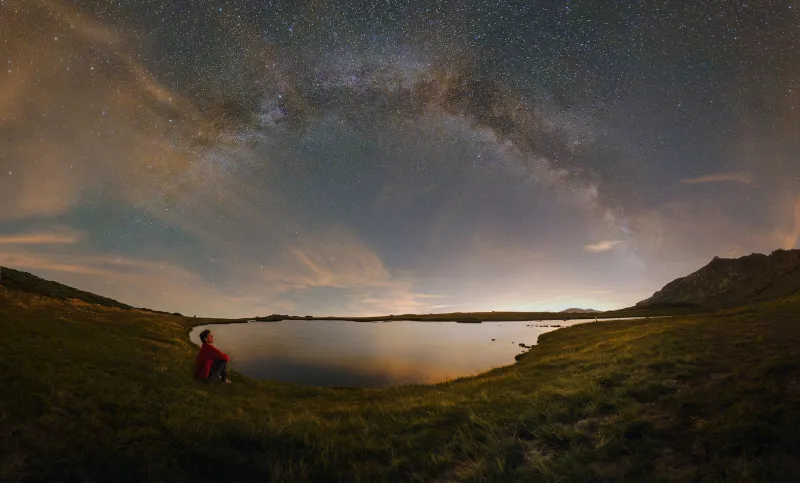
Here's something nobody tells you when you first get curious about space: the universe doesn't care what gear you own. It's been out there for 13.8 billion years, and it'll keep putting on a show whether you've got a $2,000 telescope or just a blanket and a patch of grass. The barrier to stargazing is almost entirely in your head — and this guide exists to knock it down.
Whether you're in a suburb of Columbus, a small town in New Mexico, or a rooftop apartment in Chicago, there's something in the sky worth finding tonight. Let's talk about how to actually do it.
Start With What You Already Have: Your Eyes
Seriously. Step one is just going outside after dark and looking up. Your eyes are genuinely remarkable instruments — fully dark-adapted human vision can detect individual photons of light, and on a clear night away from city glow, you can see somewhere between 2,000 and 5,000 stars with zero equipment. That's not a consolation prize. That's the same sky ancient astronomers used to map the cosmos.
The catch is dark adaptation. When you first step outside, your eyes need about 20 to 30 minutes to fully adjust to the darkness. During that window, avoid looking at your phone screen (more on that in a second), bright porch lights, or car headlights. The longer you wait, the more the sky opens up. First-timers are often stunned by how much appears once they've actually given their eyes a chance.
If you want a small upgrade that costs almost nothing, grab a red flashlight. Red light preserves your night vision in a way that white light destroys. You can find clip-on red LED lights for a few bucks on Amazon, or just put a piece of red cellophane over a regular flashlight with a rubber band. It sounds ridiculous. It works.
The Best Free Apps for Finding Your Way Around the Sky
This is where your phone stops being the enemy. A handful of apps turn your screen into a real-time map of the sky, using your GPS location and the phone's gyroscope to show you exactly what you're looking at when you point it upward.
SkySafari (free tier available) is a favorite among beginners and serious amateurs alike. It's intuitive, visually clean, and gives you solid information about each object without overwhelming you.
Stellarium Mobile is another excellent option — it's open-source, highly accurate, and free. The desktop version at stellarium.org is also worth bookmarking for planning sessions before you head out.
NASA's app is worth downloading just for the sheer volume of content, but for live sky identification, Stellarium and SkySafari are the workhorses.
One tip: most of these apps have a red-light mode buried somewhere in the settings. Find it before you go outside. That way your screen stays dim and red-tinted while you're using it, and your dark adaptation stays intact.
Gear That Actually Makes a Difference (At Every Price Point)
You don't need to spend anything to start. But if the hobby clicks and you want to invest a little, here's an honest breakdown:
$0 — Just You Learn the major constellations first. Orion, the Big Dipper, Cassiopeia, and the Southern Cross (visible from the southern US) are great starting points. Use your app, pick one constellation per session, and really learn it. This foundation makes everything else easier.
Under $30 — Binoculars A decent pair of 7x50 or 10x50 binoculars is genuinely the most underrated astronomy tool there is. They're easier to use than a telescope, great for sweeping the Milky Way, and can reveal craters on the Moon, Jupiter's four largest moons, and star clusters that look like scattered diamonds. Check thrift stores — binoculars show up constantly and often cost next to nothing.
$100–$250 — A Starter Telescope If you're ready for a telescope, resist the urge to buy the flashiest-looking one at a department store. Those are usually garbage. Instead, look at the Celestron StarSense Explorer LT 70AZ or the Orion StarBlast 4.5 in this price range. Both are beginner-friendly, durable, and will actually show you Saturn's rings — which, the first time you see them with your own eyes, feels like a glitch in reality.
$300 and up — Going Deeper At this level, you're looking at computerized mounts that can automatically find objects, larger aperture telescopes that gather more light, and accessories like better eyepieces. But honestly? Don't rush here. Spend a season learning the sky first.
Finding Dark Skies Near You
Light pollution is the single biggest obstacle for most American stargazers. If you're in or near a major city, you're probably looking at a sky where only the brightest stars and planets punch through the orange glow. The good news: you often don't have to drive that far to find something dramatically better.
The Light Pollution Map at lightpollutionmap.info is your best friend here. Type in your location and you'll see a color-coded overlay showing sky darkness across the country. Green and blue zones are solid. Gray and black zones are exceptional.
For a more curated experience, the International Dark-Sky Association (darksky.org) maintains a list of certified Dark Sky Places across the US — parks, preserves, and communities that have taken steps to reduce artificial light. There are over 180 of them in the US alone, from Cherry Springs State Park in rural Pennsylvania (one of the best on the East Coast) to the wide-open skies of Big Bend National Park in Texas. Many are free or require only a standard park entry fee.
 Photo: Big Bend National Park, via iconiclife.com
 Photo: Cherry Springs State Park, via wp.primrose.co.uk
If a road trip isn't in the cards, even driving 30 to 45 minutes from a city center can dramatically improve your view. Look for county roads away from major highways, rural parks, or open farmland where you can safely pull over. Always check local regulations, let someone know where you're going, and bring layers — nights get cold fast, even in summer.
The Part Nobody Talks About: Just Slowing Down
Stargazing has a funny way of doing something that most hobbies don't — it forces you to be still. There's no scrolling, no notifications, no noise. Just you and a sky that stretches back to the beginning of time.
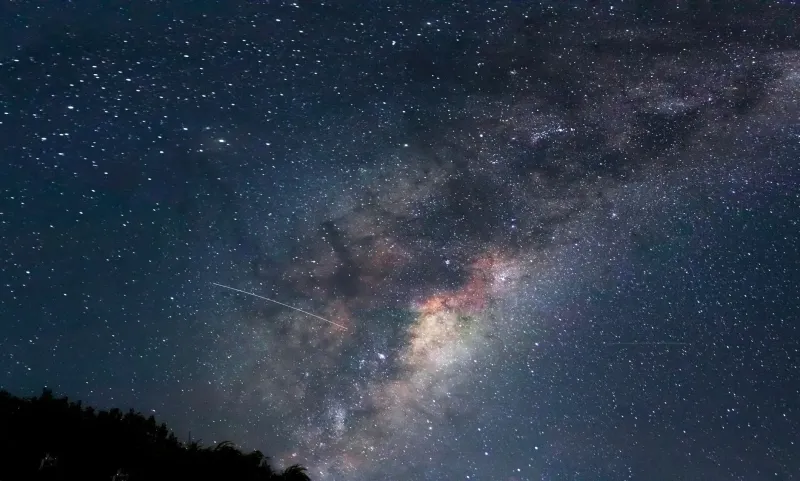
The Milky Way you're looking at on a dark night isn't just a pretty smear of light. It's a cross-section of our own galaxy, containing somewhere between 100 and 400 billion stars. The light hitting your eyes left some of those stars thousands of years ago. You're not just looking at space. You're looking at time.
That's the thing about getting into stargazing: it starts as a hobby and quietly becomes something bigger. A perspective shift. A reminder that we're living on a pale blue dot orbiting an average star on the outskirts of one galaxy among hundreds of billions.
And you can start discovering all of it tonight, for free, just by stepping outside and looking up.