Circle These Dates: 7 Astronomical Events in 2025 That Are Worth Losing Sleep Over
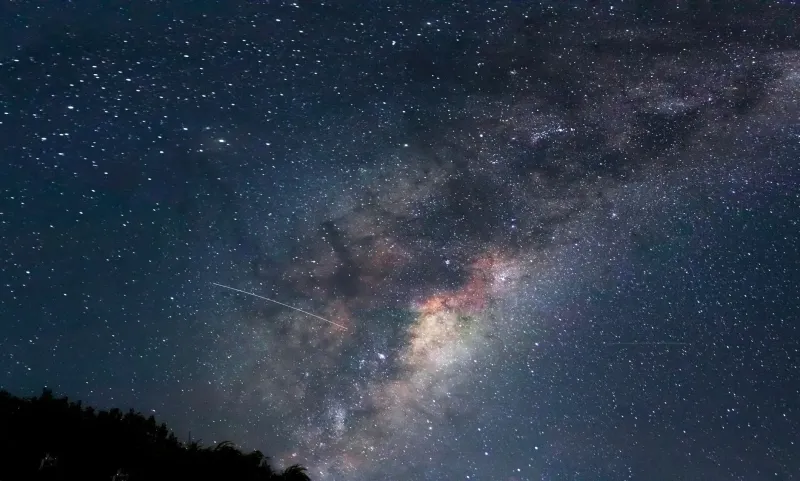
Most of us spend our evenings staring at screens. But a handful of nights each year, the sky puts on a show so good it demands your full, undivided attention. 2025 is loaded with those nights. Whether you're in the Pacific Northwest, the Texas Hill Country, the Florida Keys, or anywhere in between, there's something on this list with your name on it.
Grab a blanket, tell your smart home device to remind you, and get ready to actually look up.
1. The Quadrantid Meteor Shower Peak — January 3–4
The Quadrantids are the year's first major meteor shower, and they're criminally underrated. At their peak, they can produce up to 120 meteors per hour — rivaling even the famous Perseids. The catch? The peak window is narrow, often just a few hours, so timing matters.
Best viewing: The pre-dawn hours of January 4, when the radiant point (near the constellation Boötes) climbs high in the northeastern sky. Observers in the northern US — think Montana, Minnesota, the Great Lakes region — have a geographic advantage here.
Equipment needed: None. Just your eyes, a dark sky, and patience.
The science: Quadrantid meteors are debris from the asteroid 2003 EH1, which may itself be the remains of a comet that broke apart centuries ago. When Earth passes through that debris trail, fragments burn up in our atmosphere at speeds of roughly 25 miles per second — creating those brilliant streaks across the sky.
2. Total Lunar Eclipse — March 13–14
A total lunar eclipse is one of nature's most accessible spectacles. Unlike a solar eclipse, it's safe to watch with the naked eye, lasts for hours, and is visible across an entire hemisphere. And the 2025 edition is a good one — the Moon will pass through Earth's shadow and turn that gorgeous deep red, earning it the nickname "Blood Moon."
Best viewing: The eclipse is visible across all of North America. Totality — when the Moon is fully within Earth's shadow — begins in the late evening hours of March 13 on the West Coast and extends into the early morning of March 14 for East Coast viewers. Check a local eclipse calculator for precise times in your time zone.
Equipment needed: None, though binoculars will reveal gorgeous surface detail during totality.
The science: The Moon doesn't go dark during a total lunar eclipse — it goes red. That's because Earth's atmosphere bends and filters sunlight around the planet, scattering away blue wavelengths and letting red light reach the lunar surface. Essentially, every sunrise and sunset on Earth simultaneously paints the Moon.
3. Venus at Greatest Brilliancy — Late April
Venus is already the brightest object in the night sky after the Moon, but in late April 2025, it reaches peak dazzle — bright enough to cast faint shadows in a truly dark location and visible in broad daylight if you know exactly where to look.
Best viewing: Look west after sunset. Venus will be impossible to miss — it's the one object that makes you think "that can't just be a star." Rural areas across the Southwest (Arizona, New Mexico, Nevada) offer exceptional viewing conditions.
Equipment needed: None for naked-eye viewing. A small telescope will reveal Venus in a crescent phase — counterintuitively, it appears as a crescent when it's brightest because it's relatively close to Earth and we're viewing mostly its unlit side.
The science: Venus's extreme brightness comes from its highly reflective cloud cover, which bounces back about 70% of incoming sunlight. It's one of the most reflective objects in the solar system — and also one of the most hellish, with surface temperatures hot enough to melt lead.
4. Saturn at Opposition — September 21
Opposition is when a planet sits directly opposite the Sun from our perspective, meaning it rises at sunset, sets at sunrise, and is visible all night long. For Saturn, it's also the moment when the planet is closest to Earth — and therefore at its brightest and most detailed through a telescope.
Best viewing: The entire continental US will have a clear shot at Saturn throughout the night. The planet will be well-placed in the southern sky during the evening hours.
Equipment needed: Even a modest backyard telescope (60mm or larger) will reveal Saturn's rings, and under good conditions, you may spot the gap between the rings known as the Cassini Division. Binoculars will show Saturn as noticeably non-circular.
The science: Saturn's rings are made primarily of ice and rock, ranging in size from tiny grains to chunks as large as a house. They're thought to be relatively young on a cosmic timescale — possibly less than 400 million years old — and are slowly eroding as material rains down onto the planet.
5. The Perseid Meteor Shower — August 11–13
If there's one meteor shower that belongs on every American's radar, it's the Perseids. Peaking in the warm nights of mid-August, they're reliable, prolific (up to 100 meteors per hour under ideal conditions), and perfectly timed for summer camping trips.
Best viewing: After midnight, facing northeast toward the constellation Perseus. Dark skies away from city lights will dramatically increase your count. The rural Southwest, the Rockies, and the Great Plains are prime territory.
Equipment needed: Nothing but a comfortable place to lie down. Seriously — a lawn chair or a sleeping bag on the ground beats a telescope every time for meteor watching.
The science: The Perseids originate from Comet 109P/Swift-Tuttle, which last swung through the inner solar system in 1992. Every August, Earth crosses the debris trail it left behind. Those particles — most no bigger than a grain of sand — slam into our atmosphere at 37 miles per second and vaporize in a streak of light.
6. A Close Conjunction of Jupiter and Venus — October
When two of the sky's brightest planets appear to nearly touch in the sky, it's genuinely arresting — even for people who've never thought twice about astronomy. In October 2025, Jupiter and Venus will appear in a tight conjunction low in the western sky after sunset, close enough to fit both within the field of view of binoculars.
Best viewing: Look west shortly after sunset. The event will unfold over several evenings, with the closest approach visible to the naked eye. Clear western horizons help — coastal California, the Texas Gulf Coast, and the Florida Panhandle offer great vantage points.
Equipment needed: Binoculars will let you see both planets simultaneously with gorgeous detail. A small telescope will reveal Jupiter's cloud bands and four largest moons.
The science: Conjunctions are a line-of-sight illusion — the two planets aren't actually close to each other in space. But they're a striking reminder that the planets all orbit in roughly the same plane, occasionally lining up from our vantage point like beads on a tilted string.
7. The Geminid Meteor Shower — December 13–14
Save the best for last. The Geminids are arguably the finest meteor shower of the year — producing up to 150 multicolored meteors per hour at peak, with slow-moving, bright fireballs that are easier to photograph than most. The one drawback: December nights in much of the US are cold. Dress accordingly.
Best viewing: After 10 PM local time, facing toward the constellation Gemini. The shower is active across the entire US, but the darkest skies — rural Wyoming, the high deserts of Arizona and New Mexico, the mountains of North Carolina — will yield the most memorable experience.
Equipment needed: None for watching. A DSLR camera on a tripod with a wide-angle lens and a long exposure can capture stunning images.
The science: Unlike most meteor showers, the Geminids don't come from a comet — they originate from 3200 Phaethon, a strange rocky object that behaves like an asteroid but periodically sheds debris like a comet. Scientists are still working out exactly what Phaethon is, which makes the Geminids one of the more scientifically intriguing showers in the calendar.
The universe doesn't charge admission. All it asks is that you show up, look up, and pay attention. Put these dates in your phone right now — future-you will be grateful.