The Pros Miss Things. Backyard Observers Keep Proving It.
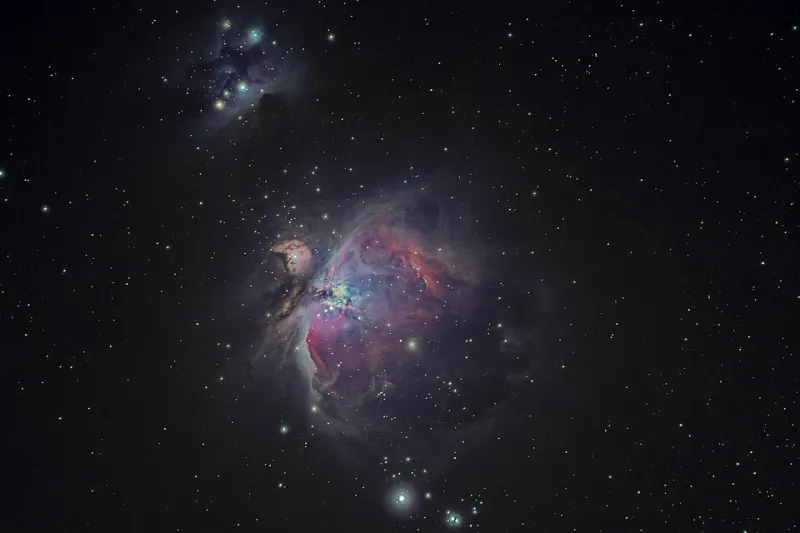
Photo: BryanGoff, CC BY-SA 4.0, via Wikimedia Commons
In 2010, an Australian schoolteacher named Alan Watson was combing through images from NASA's Sun-watching spacecraft when he spotted something the automated pipelines had flagged and dismissed. It turned out to be a sungrazing comet. He wasn't the first amateur to make that call, and he certainly wasn't the last.
Here's the thing nobody says out loud at star parties: professional astronomy is drowning in data. Surveys like Pan-STARRS and the Zwicky Transient Facility generate more images per night than any team of humans could ever look at. The machines catch most of what's out there — but "most" leaves gaps, and the gaps keep getting filled by people with backyard telescopes, off-the-shelf cameras, and a suspicious amount of free time.
What Amateurs Are Actually Finding
The list is more impressive than you'd guess.
Comets. The Lincoln Near-Earth Asteroid Research survey and Pan-STARRS have automated most comet hunting, but amateurs still find comets the surveys miss — especially ones near the Sun, low on the horizon, or moving in ways the algorithms don't expect. Japanese amateur Shigehisa Fujikawa and Brazilian astronomer Leonardo Amaral are just two names on a long list of recent amateur comet discoveries.
Supernovae. A galaxy 60 million light-years away sprouts a new bright point, and there's no algorithm emotionally invested in checking. Amateur patrols like the one run through the American Association of Variable Star Observers (AAVSO) routinely catch supernovae in nearby galaxies — sometimes before the professional follow-up teams even know there's a target.
Variable stars. This is the least glamorous and most valuable work in amateur astronomy. Long-term monitoring of variable stars — stars that brighten and dim on timescales from hours to years — is exactly the kind of tedious, decades-long data collection that professional astronomy can't fund. The AAVSO's database, built almost entirely by amateurs since 1911, gets used by professional astronomers and spacecraft mission planners to this day.
Asteroid occultations. When an asteroid passes in front of a star, the shadow sweeps across Earth. A network of amateurs with GPS-timed cameras can map the asteroid's shape with kilometer precision. It's cheap, it's real science, and it regularly refines our knowledge of asteroids NASA is planning to visit.
The Gear Question, Answered Honestly
You do not need an observatory. You need less than you think, and the entry point keeps dropping.
The laptop-only route: Projects like Zooniverse's galaxy classification efforts and NASA's citizen science portals let you hunt for comets, brown dwarfs, and transiting exoplanets from your couch using real survey data. Zero equipment. Genuine contributions. If it's January and you live in Minnesota, this is a legitimate strategy.
The visual route: A decent 8-inch Dobsonian (roughly $400–600 used) plus dark-adapted eyes can support variable star estimating and, with practice, comet and supernova checking of bright galaxies. No camera required.
The imaging route: This is where discoveries happen. A used DSLR or a dedicated astronomy camera, a telescope with decent tracking, and free software gets you a supernova patrol setup. Total cost: somewhere between a used car payment schedule and a genuinely alarming number, depending on how much willpower you have. Start with a star tracker and a camera lens before you buy a mount that weighs more than your dog.
The software that matters: AstroImageJ for photometry (free), PixInsight for processing (not free, worth it eventually), and ASTAP or similar for plate-solving your images. If you're serious about supernova hunting, learn to plate-solve before you buy anything else — it's the skill that turns a pretty picture into a scientific measurement.
The Habits That Actually Matter
Ask anyone who's made a discovery and the answer is never "expensive telescope." It's repetition.
Pick a list of 20 or 30 bright galaxies. Image them every clear night, same settings, same framing. Learn what normal looks like for each one so well that abnormal jumps off the screen. That's it. That's the entire method. The amateurs who find supernovae aren't smarter than the ones who don't — they're just the ones who went out on the twelfth boring night in a row.
Same with variable stars: pick a few targets, observe them on a schedule, submit your estimates to the AAVSO. Your data joins a century-old record. Professional astronomers will use it, probably without ever knowing your name.
The Real Sell
There's a version of astronomy where you look at things other people discovered, and it's fine — the Andromeda Galaxy is genuinely beautiful through any telescope. But there's a different version where you're the first human being to notice that a galaxy 40 million light-years away just had a star explode. That feeling doesn't have a substitute, and it's more accessible in 2025 than it has ever been.
The sky doesn't care about your credentials. It just keeps doing things, and someone has to be looking. Might as well be you.