Gravity's Funhouse: Why the Universe Bends Differently in Our Cosmic Backyard
Imagine standing in the middle of a giant trampoline. Now imagine a hundred other people standing on the same trampoline, each one creating their own dip in the fabric. The way you'd slide, wobble, and get pulled toward your neighbors? That's basically what's happening to every galaxy in the Ursa Major Supercluster — including our own Milky Way.
Our cosmic neighborhood isn't just big. It's gravitationally complicated in ways that took scientists decades to fully appreciate. And honestly, the weirdness is part of what makes living here so cosmically interesting.
What Even Is a Supercluster?
Before we get into the strange stuff, a quick refresher. Galaxies don't float around the universe solo. They cluster together into groups, those groups gather into larger clusters, and those clusters pile up into superclusters — the largest gravitationally influenced structures in the known universe.
The Ursa Major Supercluster is one of these mega-structures, a sprawling web of galaxy clusters and filaments that stretches across hundreds of millions of light-years. We're embedded in it, which means its gravity isn't just some distant, abstract force. It's actively shaping the motion of everything around us, including the Local Group of galaxies we call home.
Here's where things get interesting: being inside a supercluster rather than floating freely in the cosmic void creates a fundamentally different gravitational environment. Think of it like the difference between swimming in the open ocean versus swimming near a massive underwater current. The rules are technically the same, but the experience — and the trajectory — is wildly different.
The Great Attractor Problem (And Why It's Even Weirder Than You Think)
For decades, astronomers noticed something puzzling. Galaxies across our region of the universe — thousands of them — appeared to be streaming in the same general direction. Not randomly drifting, not expanding uniformly the way you'd expect from the Big Bang's aftereffects. Moving. Purposefully. Toward something.
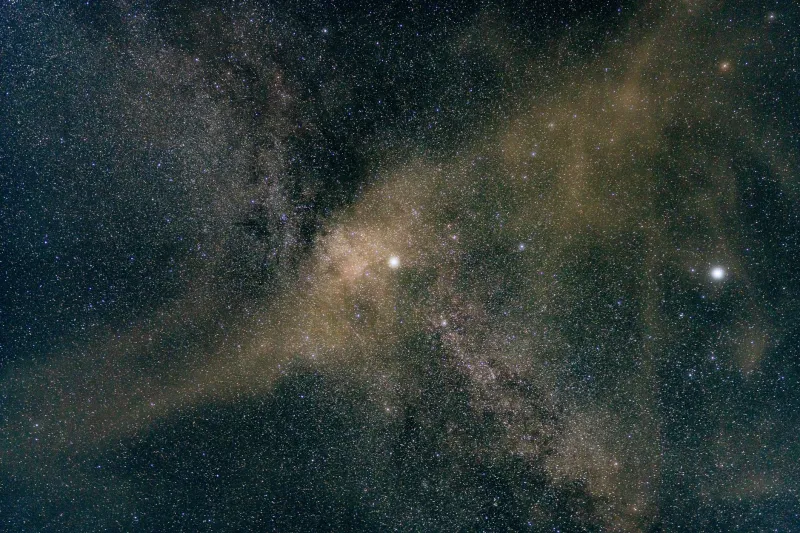
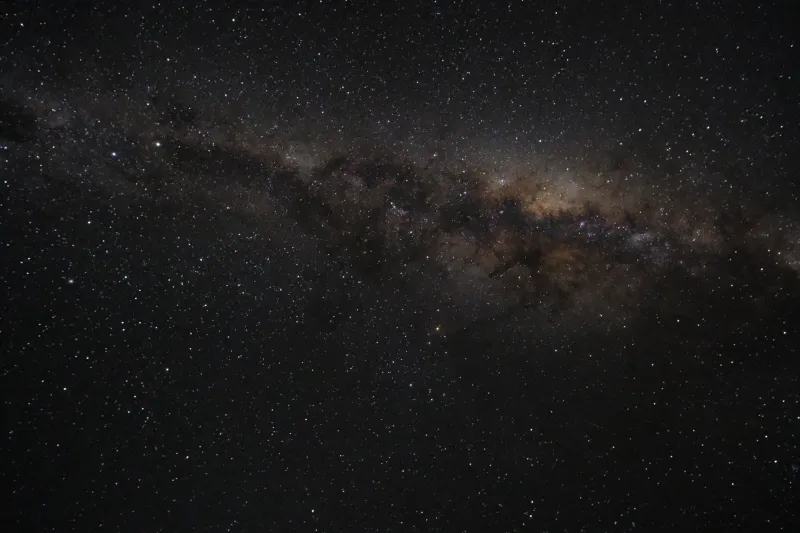
That something got named the Great Attractor, a gravitational anomaly lurking behind the dense star fields of the Milky Way's plane, making it annoyingly hard to observe directly. Initial estimates suggested it was a massive concentration of matter pulling on everything within a few hundred million light-years.
But when astronomers mapped things more carefully, they realized the Great Attractor was itself being pulled — toward something even larger, a structure called the Shapley Supercluster. So the gravitational weirdness doesn't stop at one level. It stacks. Our local gravitational landscape is shaped by forces nested inside forces, like a Russian doll made entirely of invisible mass.
The Ursa Major Supercluster sits within this broader gravitational drama, contributing its own mass to the mix and influencing how galaxies in our neighborhood move relative to each other.
Filaments, Voids, and the Invisible Skeleton
One of the most mind-bending aspects of supercluster structure is what scientists call the cosmic web. Galaxies and galaxy clusters aren't distributed randomly. They trace out enormous filaments — long, threadlike structures of matter — with vast, nearly empty voids between them.
The Ursa Major Supercluster is threaded through with these filaments. And the gravitational effect of that architecture is profound. Galaxies near filament intersections experience stronger gravitational pulls from multiple directions simultaneously. Galaxies near the edges of voids, on the other hand, are in a kind of gravitational no-man's-land, being gently tugged in several directions at once without strong dominance from any single source.
This creates what astronomers sometimes call peculiar velocities — the difference between how fast a galaxy is moving due to cosmic expansion and how fast it's actually moving when you measure it. In regions with strong filament structure, peculiar velocities can be enormous, sometimes hundreds of kilometers per second. That's not a rounding error. That's gravity doing something genuinely strange.
Why Being Trapped in a Gravity Well Actually Matters
Here's a perspective shift that might reframe how you think about our cosmic address. The Milky Way isn't drifting freely through empty space. It's gravitationally bound within the Local Group, which is itself falling toward the Virgo Cluster, which anchors a significant portion of the Laniakea Supercluster — the even larger structure that the Ursa Major Supercluster is considered part of, depending on which mapping framework you use.
Being embedded in all of this gravitational structure means our future isn't just about cosmic expansion pushing everything apart. It's a tug-of-war. The universe's accelerating expansion, driven by dark energy, is working hard to separate everything. But the gravitational mass of our supercluster environment is pulling back.
For galaxies deep inside a supercluster's gravity well — like ours — the local gravitational binding is strong enough that these galaxies won't be flung apart by expansion anytime soon. Instead, they'll eventually merge. The Milky Way and Andromeda are already on a collision course, expected to meet in a few billion years. That merger is, in a very real sense, a consequence of the gravitational environment we've always lived in.
Reading the Map We Can't Fully See
The frustrating and fascinating thing about mapping our own supercluster is that we're doing it from the inside. It's like trying to draw a map of your city while standing in your living room. You can see your immediate neighborhood clearly, but the full picture requires stitching together observations from different angles, different wavelengths, and different techniques.
Astronomers use galaxy redshift surveys — essentially measuring how fast galaxies are moving away from or toward us — to reconstruct the gravitational landscape. When a galaxy is moving faster than pure expansion would predict, something is pulling it. Track enough of those motions, and you start to see the invisible architecture emerge.
Recent surveys like the 2MASS Redshift Survey and the Cosmicflows project have dramatically sharpened our picture of the local universe's gravitational structure. What they've revealed is a neighborhood far more dynamic, more interconnected, and more gravitationally complex than anyone imagined even thirty years ago.
The Takeaway
We don't live in a quiet corner of the universe. We live in a gravitational funhouse, where mass pulls on mass across hundreds of millions of light-years, where galaxies stream toward invisible attractors, and where the future of everything around us is being negotiated between expansion and gravity in real time.
That's not a reason to feel small. It's a reason to feel genuinely curious. Every time you look up at the night sky, you're looking out from inside one of the most structurally complex gravitational environments in the observable universe. And we're just beginning to understand what that means.