The Bear Overhead: How Ancient Star Stories Became the Navigation Systems of the Modern World
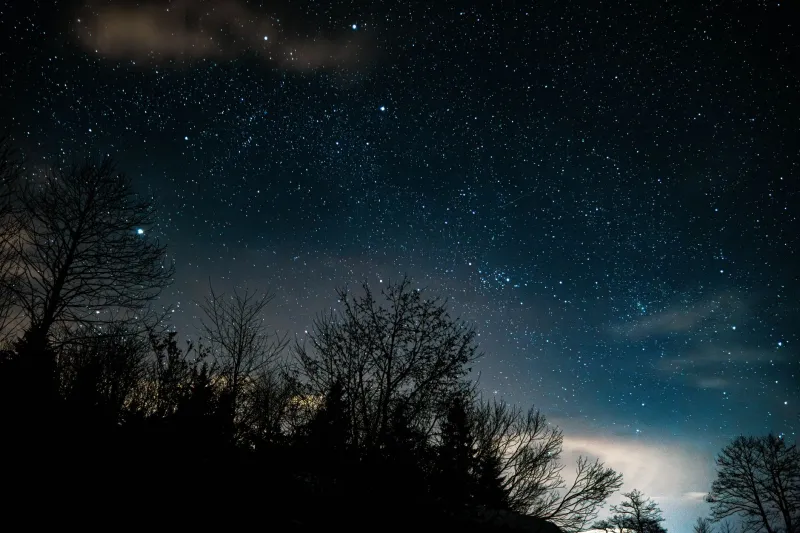
There's a bear circling overhead right now. It never sets, never rests, never disappears from the northern sky. And for thousands of years, across dozens of cultures on every inhabited continent in the northern hemisphere, people looked up at those stars and told stories about it — stories that, it turns out, were also instruction manuals for getting home.
The constellation we call Ursa Major, the Great Bear, has one of the most surprisingly practical origin stories in astronomy. What began as mythology became cartography. What began as campfire tradition became aerospace engineering. The throughline from ancient bear legends to modern navigation systems is longer and stranger than most people realize.
A Bear by Many Names
Here's a remarkable fact: cultures separated by oceans and millennia independently looked at the same seven stars and saw a bear. Indigenous peoples across North America — including the Iroquois, the Micmac, and several Plains nations — had bear stories attached to what we now call the Big Dipper. Ancient Greeks called it Arktos, the bear, giving us the word Arctic. Siberian peoples, separated from North Americans by the Bering land bridge for thousands of years, also described a bear in that same patch of sky.
The convergence is so striking that some researchers have argued it points to a single, extraordinarily ancient origin story — possibly carried by the very first humans to migrate into Asia and eventually across into the Americas, tens of thousands of years ago. The bear in the sky might be one of the oldest continuous stories in human history.
But these weren't just stories. They were navigational mnemonics. A story you tell your children around a fire is a story they'll remember when they're alone in the dark, trying to find north.
Indigenous Wayfinding and the Practical Sky
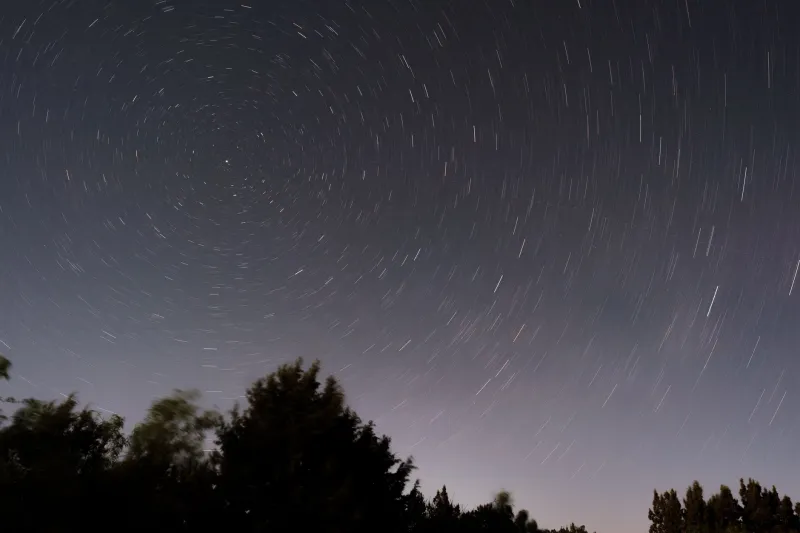
For many Native American peoples, the night sky wasn't a backdrop for mythology — it was infrastructure. The stars of Ursa Major, and particularly the pointer stars Dubhe and Merak at the front edge of the Big Dipper's bowl, reliably indicate the direction of Polaris, the North Star. Follow that line, and you know which way is north. Always.
The Anishinaabe people of the Great Lakes region developed sophisticated astronomical knowledge that incorporated star positions for seasonal guidance, agricultural timing, and directional orientation. Similar traditions existed among the Cherokee, who incorporated star knowledge into their understanding of the seasons and migration patterns of animals — knowledge that was inseparable from survival.
What's significant about this isn't just that Indigenous peoples used stars for navigation. It's how they encoded that knowledge. The story of the bear, repeated generation after generation, kept the navigational information alive in a format that didn't require written records, instruments, or formal schooling. The mythology was the technology.
European Adoption and the Age of Exploration
When European navigators began their great age of oceanic exploration in the 15th and 16th centuries, they brought with them a formalized version of the same basic principle. The North Star was their fixed reference point, and the Big Dipper was their clock hand, rotating around Polaris every 24 hours like the world's most reliable timepiece.
Navigators used the relationship between the Big Dipper's position and Polaris to estimate latitude — how far north or south they were — and to track the passage of time at night. Combine that with a sextant, a good compass, and some careful arithmetic, and you could cross an ocean without ever seeing land.
The technique was refined, formalized, and eventually codified into naval training manuals. What had once been oral tradition became curriculum.
World War II and the Stars Over Europe
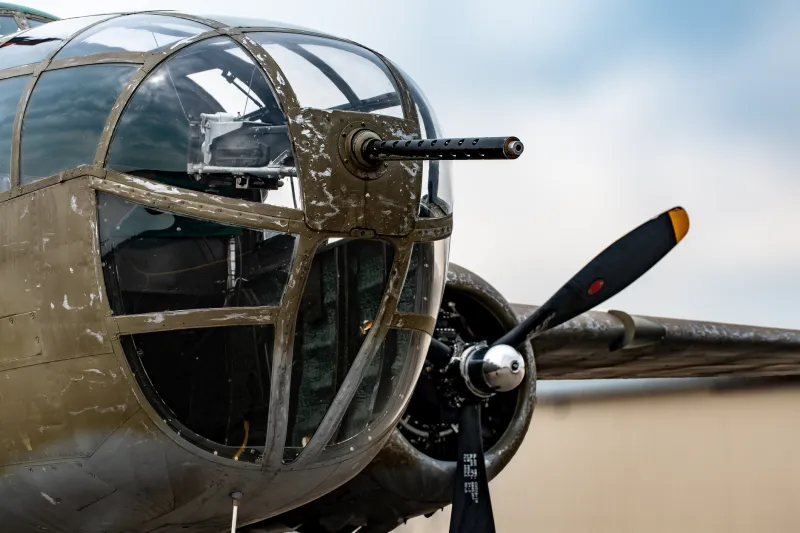
Fast-forward to the 1940s. Allied bomber crews flying night missions over Nazi-occupied Europe needed to navigate without radio signals that could be intercepted and without lights that would give away their position. Celestial navigation — reading the stars — became a critical military skill.
Bomber navigators were trained to use a device called the astrocompass, which could determine true north by measuring the angle of a known star against the horizon. Polaris, and by extension the Big Dipper as the pointer, was central to this system. The same geometric logic that a Micmac elder might have used to orient a hunting party in the forests of Nova Scotia was being taught to 19-year-old kids from Ohio and Georgia before they climbed into B-17s.
The stars didn't care about the war. They just kept pointing north.
NASA and the Modern Military: Stars Still Matter
You might assume that GPS, inertial navigation systems, and digital mapping have made stellar navigation obsolete. You'd be partially right — and partially very wrong.
NASA has long used star trackers on spacecraft to determine orientation in deep space. These devices work by photographing the positions of known stars and comparing them to a catalog to calculate precise attitude — which way the spacecraft is pointing. It's celestial navigation at computer speed, but the underlying principle is identical to what a navigator on a sailing ship did by hand three hundred years ago.
The U.S. military has also maintained investment in stellar navigation as a backup system specifically because GPS can be jammed, spoofed, or denied by adversaries. In 2016, the U.S. Naval Academy quietly reintroduced celestial navigation to its curriculum after dropping it in the 1990s. The reasoning was straightforward: a system that doesn't depend on satellites or electronic signals is a system that can't be electronically attacked.
Ursa Major, and the navigational logic it encodes, remains a genuine operational backup for modern military vessels.
The Unbroken Thread
There's something genuinely moving about this continuity. A story told around a fire in the forests of the ancient world, designed to help people find their way home, flows through Greek mythology, European navigation manuals, World War II training programs, and into the software architecture of spacecraft currently orbiting other planets.
The bear overhead isn't just a constellation. It's a record of how human beings have always done what humans do best — looked up at something beautiful and figured out how to use it.
Next time you're outside on a clear night and you spot the Big Dipper, take a second to trace those pointer stars up to Polaris. You're not just doing amateur astronomy. You're participating in one of the longest-running practical traditions in human history. And you're sharing that moment with every hunter, sailor, navigator, and astronaut who looked up at those same stars and thought: okay, now I know where I am.