What the Big Dipper's Backyard Taught Us About How Galaxies Are Born
The Most Important Patch of Sky You've Never Heard Of
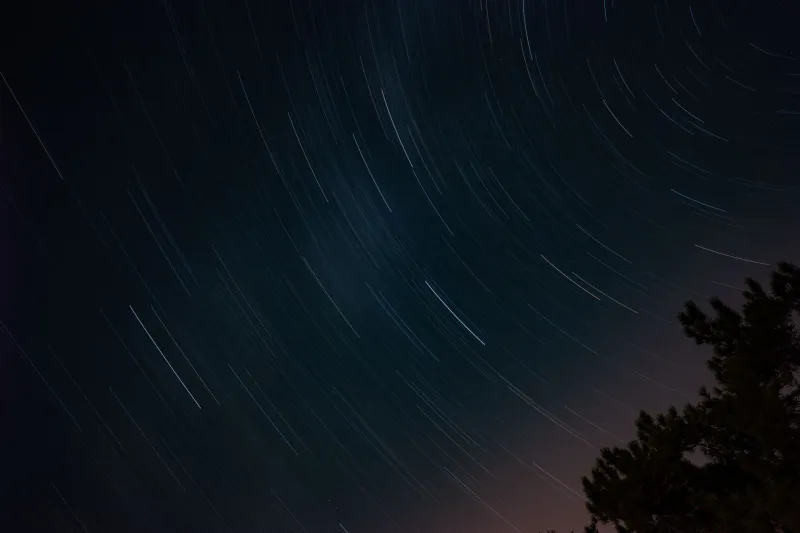
Most Americans can find the Big Dipper without even trying. It's up there every single night, reliably hanging over the northern horizon like a cosmic landmark someone pinned in place just for us. But here's the thing almost nobody talks about at backyard star parties: if you could somehow see through those seven familiar stars, past the constellation they anchor, and keep going for tens of millions of light-years, you'd be staring straight into one of the universe's most revealing secrets.
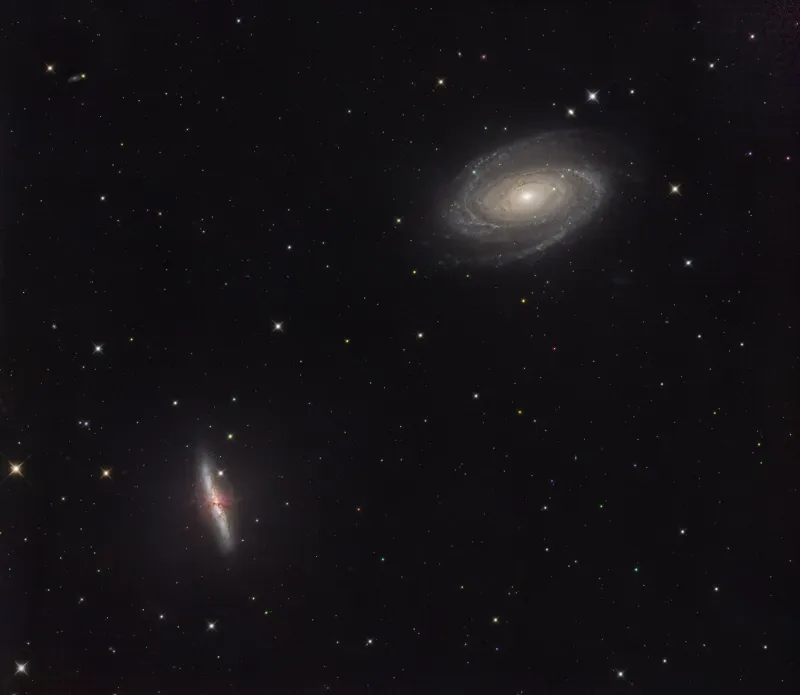
Tucked behind Ursa Major — the Great Bear — is a sprawling collection of galaxies that astronomers call the Ursa Major Cluster. It's not as famous as the Virgo Cluster or as dramatic as the Coma Cluster, but for researchers trying to understand how galaxies actually form and evolve, this particular neighborhood has been worth its weight in Nobel Prizes. Quietly, patiently, over more than a century of observations, it has handed us clue after clue about the mechanics of the universe itself.
A Century of Looking in the Right Direction
The story starts in the early 1900s, when astronomers were still arguing about whether those fuzzy smudges in long-exposure photographs were clouds of gas inside our own Milky Way or something else entirely — something almost unimaginably larger and farther away.
When Edwin Hubble settled that debate in the 1920s, confirming that many of these smudges were in fact entire galaxies unto themselves, the race was on to catalog and study them. The region of sky covered by Ursa Major turned out to be unusually rich. Early surveys found galaxy after galaxy clustered in that direction, and by mid-century, astronomers had begun to suspect they were looking at a genuinely dense structure — a gravitationally bound family of galaxies all living in the same cosmic zip code.
What made the Ursa Major Cluster especially useful as a laboratory was something almost mundane: it's relatively close. At roughly 50 to 60 million light-years away, it's near enough that even mid-20th century telescopes could resolve individual galaxies in reasonable detail. That proximity made it a go-to target for researchers who wanted to study how galaxies behave when they live in groups.
Collisions, Mergers, and the Messy Business of Growing Up
One of the biggest revelations to come out of studying this region is just how violent galaxy evolution really is. We tend to think of space as empty and peaceful, but galaxies are not static objects floating in isolation. They interact. They tug on each other gravitationally. Sometimes they collide.
The Ursa Major region gave astronomers front-row seats to this process. Detailed observations — especially those made possible by the Hubble Space Telescope starting in the 1990s — revealed galaxies in various stages of interaction. Some showed stretched tidal tails, ribbons of stars pulled out by a gravitational encounter with a neighbor. Others displayed disturbed, asymmetric shapes that betrayed a past or ongoing merger.
These weren't just pretty pictures. They were data points in a much larger argument about how the universe assembles itself. The prevailing model — called hierarchical structure formation — says that small things come together to build bigger things. Tiny dwarf galaxies merge into larger spirals. Spirals eventually collide to form massive elliptical galaxies. The Ursa Major Cluster, with its mix of galaxy types caught at different stages of this process, became a kind of time-lapse movie of galactic growing pains.
What the Gas Tells Us
Stars are only part of the story. Galaxies are also filled with gas — the raw ingredient for future star formation — and studying how that gas behaves in a cluster environment has been just as revealing.
When a galaxy falls into a dense cluster, the hot gas that fills the space between galaxies can strip away the infalling galaxy's own gas supply through a process called ram pressure stripping. Think of it like a car driving through a rainstorm: the rain gets pushed aside and deflected. A galaxy moving through a cluster experiences something similar, with its gas getting swept backward and eventually lost.
Observations of the Ursa Major Cluster helped astronomers document this process in action. Galaxies near the cluster's core showed signs of gas depletion and reduced star formation rates compared to galaxies in the outskirts. This wasn't a coincidence — it was cause and effect, and mapping it out helped build the case for ram pressure stripping as one of the key mechanisms that transforms spiral galaxies into the gas-poor, star-formation-dead ellipticals we see so commonly in dense environments.
James Webb Turns Up the Volume
If Hubble gave us clarity, the James Webb Space Telescope — launched in late 2021 and fully operational by 2022 — gave us depth. Webb's infrared sensitivity allows it to peer through dust that blocks visible light and to detect the faint heat signatures of star formation happening inside dense molecular clouds.
Pointed toward the Ursa Major region, Webb has been helping astronomers probe questions that Hubble could only gesture toward. How exactly does star formation shut off in cluster galaxies? What triggers a burst of new stars in a merging system? How do supermassive black holes at galactic centers respond to the chaos of a merger?
The answers are still coming in, but early results have reinforced the picture that galaxy evolution is deeply tied to environment. Where a galaxy lives — whether it's in a quiet rural stretch of the cosmic web or a dense, chaotic cluster — shapes what it becomes over billions of years.
Why This Matters to You, Standing in Your Backyard
Here's the part that tends to land hardest when you really sit with it: every galaxy we've studied in the Ursa Major Cluster, every merger we've documented, every stripped gas tail we've photographed — all of it is a version of our own origin story.
The Milky Way is not immune to these processes. We're currently in the middle of a slow-motion collision with the Andromeda Galaxy, set to fully merge in about 4.5 billion years. Dwarf galaxies have been merging into us for billions of years already. The structure of our own galaxy — its spiral arms, its central bar, its halo of ancient stars — bears the fingerprints of every encounter it's ever had.
Studying the Ursa Major Cluster is, in a very real sense, studying ourselves. It's looking at the mechanisms that built our home and asking: how did all of this happen? How does something as vast and complex as a galaxy come to exist in the first place?
Next time you step outside on a clear night and find the Big Dipper hanging overhead, take a second to think about what's behind it. Not just empty darkness, but an entire archive of cosmic history — galaxies colliding, merging, evolving, and slowly becoming something new. The universe has been running this experiment for 13 billion years, and we're finally starting to read the results.